
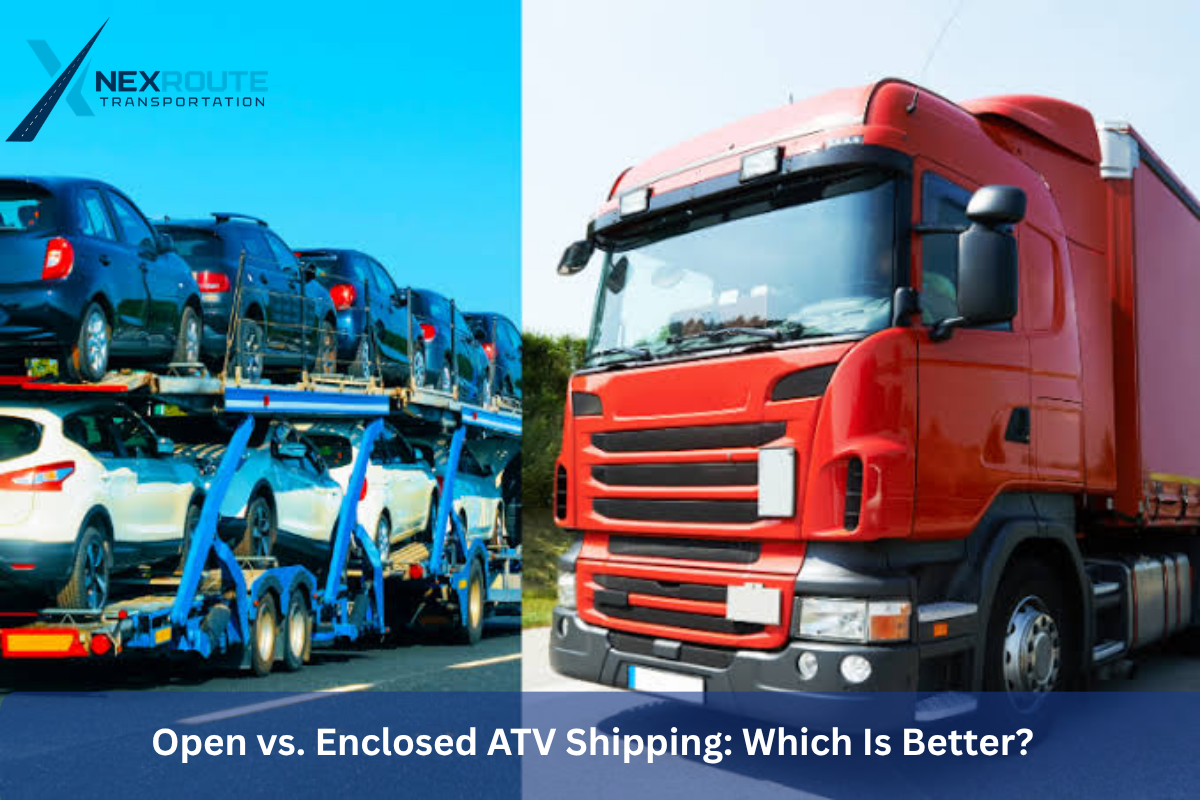
Open vs. Enclosed ATV Shipping: Which Is Better?
When you need to transport an ATV across the country, one of the first decisions you may need to make is whether to choose open or enclosed transportation. Both options can be used to move an ATV from one location to another, but they offer different levels of protection, availability, and cost.
The right choice depends on your ATV, your budget, the distance you are shipping it, and how much protection you want during transportation. Understanding the differences between open and enclosed ATV shipping can help you choose the option that fits your situation.
What Is Open ATV Shipping?
Open ATV shipping means your ATV is transported on an open trailer rather than inside a fully enclosed trailer.
This is a common transportation method because open trailers can accommodate multiple recreational vehicles and are widely available for different routes. Your ATV is properly positioned and secured for transportation before the carrier begins the trip.
Because the vehicle is exposed to outdoor conditions, it can encounter rain, dust, wind, and road debris during transportation.
For many ATV owners, this is not a major concern, particularly when transporting a standard recreational ATV and keeping transportation costs reasonable.
What Is Enclosed ATV Shipping?
Enclosed ATV shipping involves transporting your ATV inside an enclosed trailer or other covered transportation equipment.
The enclosed environment provides an additional layer of protection from outside weather and road debris. This can be particularly useful when transporting a valuable, customized, restored, or specialty ATV.
Enclosed transportation may not be necessary for every shipment, but some owners prefer it when protecting the vehicle is a higher priority than minimizing transportation costs.
Availability can also vary depending on the route and carrier.
Open vs. Enclosed ATV Shipping: Key Differences
The biggest difference between the two options is the level of protection provided during transportation.
Protection
Enclosed transportation generally provides greater protection from rain, dust, wind, and road debris because the ATV is inside the trailer.
Open transportation leaves the ATV exposed to outdoor conditions. Although the vehicle is secured for transportation, it does not have the same physical barrier against weather and debris.
If your ATV is heavily customized or has a finish you want to protect carefully, enclosed shipping may be worth considering.
Cost
Open transportation is generally the more budget-friendly option.
Enclosed transportation can cost more because enclosed equipment provides additional protection and may have more limited availability.
The actual price of either option depends on factors such as distance, vehicle dimensions, pickup and delivery locations, carrier availability, and current transportation demand.
Instead of choosing solely based on a general price estimate, request a quote based on your specific ATV and route.
Availability
Open carriers are often more widely available because they are commonly used for vehicle transportation.
Enclosed transportation may have fewer available carriers on certain routes. This can affect scheduling and delivery options.
If you have a specific pickup or delivery date, ask about availability before choosing an enclosed option.
Vehicle Type
A standard ATV used regularly for recreational riding may not require enclosed transportation.
However, a high-value or customized ATV may benefit from the additional protection of an enclosed trailer.
Your vehicle’s value and condition should be part of the decision.
When Is Open ATV Shipping a Good Choice?
Open transportation can be a practical choice for many ATV owners.
Consider open shipping if:
- You want to keep transportation costs lower
- Your ATV is a standard recreational vehicle
- You are comfortable with normal exposure to outdoor conditions
- Open transportation is more readily available for your route
- You need flexible scheduling
- You are transporting the ATV a long distance and want a practical shipping option
For many owners, open shipping provides a good balance between convenience and cost.
An ATV is designed for outdoor use, so normal exposure to weather during transportation may not be a major concern for a recreational vehicle.
However, proper preparation is still important.
When Is Enclosed ATV Shipping Better?
Enclosed shipping may be the better choice when protecting the ATV is your top priority.
It may make sense for:
- High-value ATVs
- Custom-built ATVs
- Restored or collector vehicles
- Specialty models
- ATVs with expensive finishes
- Vehicles being transported for an important event
- Owners who want additional protection from weather and road debris
For a valuable ATV, paying more for additional protection may be worthwhile.
For example, if you have invested heavily in custom paint, upgraded components, or other modifications, you may prefer to reduce exposure to outside conditions during a long-distance shipment.
Does Enclosed Shipping Guarantee No Damage?
Enclosed transportation provides additional protection, but no transportation method can completely eliminate the possibility of damage.
The ATV still needs to be properly loaded, positioned, and secured. Mechanical issues, handling problems, and other unexpected circumstances can occur regardless of whether transportation is open or enclosed.
This is why choosing an experienced transportation provider and documenting the vehicle’s condition before pickup is important.
Take photographs of the ATV from different angles before transportation. Make sure existing scratches, dents, or other damage are documented.
When the ATV arrives, inspect it again before completing the delivery process.
How to Prepare an ATV for Open or Enclosed Shipping
Preparation is important regardless of which transportation method you choose.
Clean the ATV
Wash the ATV before pickup so existing damage can be identified more easily.
Remove Personal Items
Take out loose belongings, tools, and other items that are not required for transportation.
Secure Accessories
If your ATV has removable accessories or equipment, ask the transportation company whether they should be removed or secured before pickup.
Check for Leaks
Look for fuel, oil, coolant, or other fluid leaks. Inform the carrier about any known mechanical issues.
Check the Tires
Make sure the tires are in appropriate condition for loading and unloading.
Tell the Carrier About Modifications
Oversized tires, racks, winches, lift kits, and other modifications can affect the ATV’s dimensions.
Providing accurate information helps the carrier plan for the shipment properly.
What About Weather During Transportation?
Weather is one of the main differences between open and enclosed transportation.
With open transportation, your ATV may encounter rain, snow, dust, wind, or other outdoor conditions depending on the route and season.
Enclosed transportation offers a physical barrier against most of these conditions.
If your shipment is traveling through areas where severe weather is expected, you may feel more comfortable choosing enclosed transportation.
However, weather conditions can change during a long-distance trip, so it is important to discuss expectations with your transportation provider.
Does the Shipping Distance Matter?
Distance does not automatically determine whether open or enclosed transportation is better, but it can influence the decision.
For a short shipment, you may be comfortable using open transportation because the trip is relatively brief.
For a cross-country shipment, the ATV may spend several days in transit and experience a wider range of weather and road conditions.
If you are shipping a valuable ATV across several states, enclosed transportation can provide additional peace of mind.
On the other hand, if you are transporting a standard ATV and want to control costs, open shipping can still be a practical choice for a long-distance shipment.
How Much Does ATV Shipping Cost?
There is no universal price for shipping an ATV.
The cost can depend on:
- Pickup and delivery locations
- Total transportation distance
- Open or enclosed service
- ATV size and weight
- Vehicle condition
- Carrier availability
- Seasonal demand
- Fuel costs
- Special handling requirements
Enclosed transportation generally costs more than open transportation, but the exact difference varies by shipment.
The best way to determine the cost is to request a personalized quote with accurate information about your ATV and route.
How to Choose the Right Option
When deciding between open and enclosed ATV shipping, consider four main questions.
How valuable is your ATV?
If it is a standard recreational vehicle, open transportation may be sufficient. If it is expensive or customized, enclosed transportation may provide more peace of mind.
What is your budget?
If keeping costs under control is important, open shipping is generally the more practical option.
How much protection do you want?
If avoiding exposure to weather and road debris is a priority, consider enclosed transportation.
How flexible is your schedule?
Open transportation may offer more availability on some routes. Enclosed options can have more limited carrier availability.
There is no single choice that is best for every ATV owner.
Final Thoughts
The decision between open and enclosed ATV shipping ultimately comes down to your vehicle, budget, route, and preferred level of protection.
Open ATV shipping can be a practical and cost-effective option for many standard recreational ATVs. It is widely used and can provide convenient transportation without the additional cost of an enclosed trailer.
Enclosed ATV shipping is worth considering when you own a high-value, customized, restored, or specialty ATV and want additional protection from weather and road debris.
Whichever option you choose, proper preparation and a reliable transportation provider are essential. Provide accurate vehicle dimensions, disclose modifications and mechanical issues, document the ATV’s condition, and inspect it carefully when it arrives.
With the right transportation method and preparation, shipping your ATV can be a straightforward way to move it safely across the U.S.