
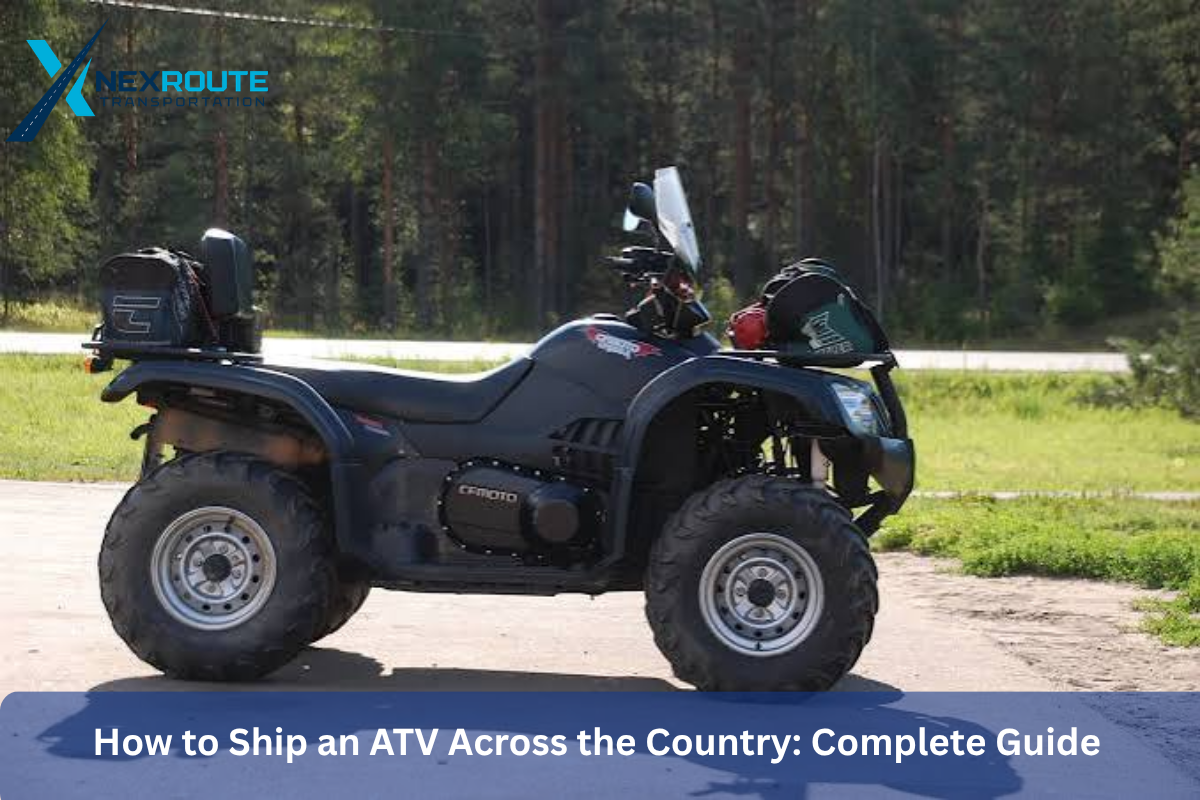
An ATV weighs 400 to 800 pounds, measures about 4 feet wide and 7 feet long, and cannot be driven across three states on its own. That leaves shipping. The good news is that ATVs are the easiest powersports vehicles to move. They are compact enough to fit into gaps on a trailer and light enough for standard haulers. The bad news is that the booking process is full of traps for first-timers. Here is how to get it done without overpaying or losing your machine to a bad broker.
Why Are ATVs Easier and Cheaper to Ship Than UTVs?
ATVs are compact enough to load sideways on a standard car trailer, which means two or three machines can fit in the space normally reserved for one sedan. That makes them valuable “filler freight” for carriers looking to maximize trailer space. UTVs cannot be loaded sideways. They take a full car slot and cost significantly more to move. A cross-country ATV shipment runs $550 to $800, while the same route for a UTV runs $900 to $1,400 or more.
What Are the Main ATV Shipping Methods?
Three methods cover almost every shipment. Each one fits a different budget, timeline, and machine value. Choosing the wrong one either wastes money or leaves your ATV exposed to damage it did not need to risk.
Open Transport
Open transport is the industry standard for roughly 80 percent of powersports shipments. Your ATV rides on a multi-car wedge trailer or a larger auto hauler, exposed to weather and road debris. Since ATVs are built to handle dirt, mud, and rain, this is usually the right call. It is the cheapest option and the most widely available.
Enclosed Transport
Enclosed transport puts your ATV inside a sealed, hard-sided trailer. It costs 30 to 50 percent more than open transport because enclosed trailers carry fewer vehicles and cost the carrier more to operate. Choose enclosed when the machine is a custom build, when it has soft canvas components that wind will tear, or when the route crosses salt-treated winter highways.
LTL Freight
Less-than-truckload freight moves your ATV through a commercial terminal network instead of door to door. The machine must be drained of fluids, crated or palletized, and dropped off at a terminal. LTL is viable for standard ATVs shipped by dealerships or sellers with loading dock access. For most private sellers, the creating work outweighs the savings.
How Much Does ATV Shipping Cost?
Costs scale with distance, but the per-mile rate drops on longer hauls because the heavy work happens on day one. Once the machine is strapped down, highway miles are relatively cheap.
| Distance | Estimated Cost | Cost Per Mile |
| 0 to 500 miles: | $200 to $350 | $0.80 to $1.50 |
| 500 to 1,500 miles | $350 to $550 | $0.50 to $0.90 |
| 1,500+ miles | $550 to $800 | $0.40 to $0.70 |
These figures assume a factory-spec machine on a major interstate route. Modifications, inoperable vehicles, and remote pickup locations all push the price higher.
How Should You Prepare an ATV for Shipping?
Preparation protects your machine and your ability to file a claim if something goes wrong. The driver performs a condition inspection before loading, and that inspection goes on the Bill of Lading. If the ATV is too dirty to inspect, the driver notes that on the document. Any damage discovered at delivery becomes unclaimable because you cannot prove when it happened.
Wash and Document the Machine
Clean the ATV thoroughly so scratches, dents, and cracked plastic are visible. Take time-stamped photos from every angle. Keep a copy of the signed Bill of Lading. This documentation is your only evidence if a claim becomes necessary.
Secure Loose Items and Reduce Fuel
Remove GPS units, whip flags, tools, and any detachable accessories. Carriers are not responsible for loose gear, and insurance policies do not cover it. Reduce fuel to one-quarter tank, which is a federal safety requirement for vehicle transport. This leaves enough fuel to load and unload without carrying unnecessary weight or fire risk.
Disclose Modifications and Condition
Measure your ATV with a tape after any modification. Lift kits, oversized tires, and aftermarket cages change the dimensions that determine trailer placement. If you tell a broker the machine is stock and the driver arrives to find a lifted build, the carrier can reject the load or charge an adjustment on the spot. Disclose whether the ATV runs, steers, and brakes. Inoperable units carry a surcharge of $100 to $150.
How Do You Choose a Shipper or Broker?
Most websites you find are brokers, not carriers. Brokers do not own trucks. They post your shipment on a national load board and take a cut. A good broker is useful because they vet carriers and manage paperwork. A bad broker will lowball you to win the booking, then leave your ATV sitting for weeks while they look for a carrier willing to move it at an impossible rate.
How to Spot a Lowball Quote
If three quotes come in around the same number and one comes in dramatically lower, that low quote is bait. The broker secures your deposit, posts the load at a rate no carrier will accept, and then calls you later with a “fuel surcharge update” or a claim that the route is unusually busy. You either pay the real market rate or wait indefinitely. Compare quotes across multiple brokers and treat outliers as warnings, not deals.
What to Verify Before Booking
· FMCSA registration with active DOT and MC numbers.
· Contingent cargo insurance of at least $100,000.
· Transparent all-in pricing with no hidden fees.
· A clear cancellation and deposit policy in writing.
· Reviews that show how the broker handles problems, not just the happy ones.
What Happens at Pickup and Delivery?
At pickup, the driver inspects the ATV, notes its condition on the Bill of Lading, and loads it onto the trailer. At delivery, you inspect the machine before signing anything. Walk around it. Check the plastics, the frame, the tires, and any component that could have shifted in transit. If you spot new damage, note it on the Bill of Lading and photograph it while the ATV is still on the trailer.
Signing a clean Bill of Lading declares the machine arrived in perfect condition. Once you sign, filing a claim becomes nearly impossible.
NexRoute Transportation handles ATV shipping with vetted carriers and transparent pricing. We quote all-in rates, confirm dimensions before dispatch, and keep you updated from pickup through delivery. Reach out today for a quote on your shipment.
FAQs
Q1: How much does it cost to ship an ATV across the country?
A: Cross-country ATV shipping runs $550 to $800 for a factory-spec machine on a major route. Enclosed transport adds 30 to 50 percent. Modifications, inoperable vehicles, and rural pickup or delivery locations push the price higher.
Q2: What is the cheapest way to ship an ATV?
A: Open transport is the cheapest option, usually $200 to $500 for short and mid-range hauls. LTL freight can cost less for crated machines but requires draining fluids and palletizing the ATV, which is labor-intensive. For most private sellers, open transport offers the best balance of cost and convenience.
Q3: Can I ship an ATV that does not run?
A: Yes, but it requires a carrier equipped with a winch and adds a surcharge of $100 to $150. Disclose the condition when booking. A driver who arrives expecting a running machine and finds a dead one can reject the load or charge an adjustment on the spot.
Q4: Do I need to drain the fuel before shipping an ATV?
A: For open and enclosed transport, reduce fuel to one-quarter tank. This is a federal safety requirement. Full draining is only necessary for LTL freight shipments, where the machine must be crated and accepted at a commercial terminal.
Q5: How long does ATV shipping take?
A: Short hauls under 500 miles take one to three days. Cross-country shipments typically take seven to ten days, depending on route density and driver-hour regulations. Multi-car trailers sometimes extend delivery windows by 48 hours when stops accumulate along the route.