
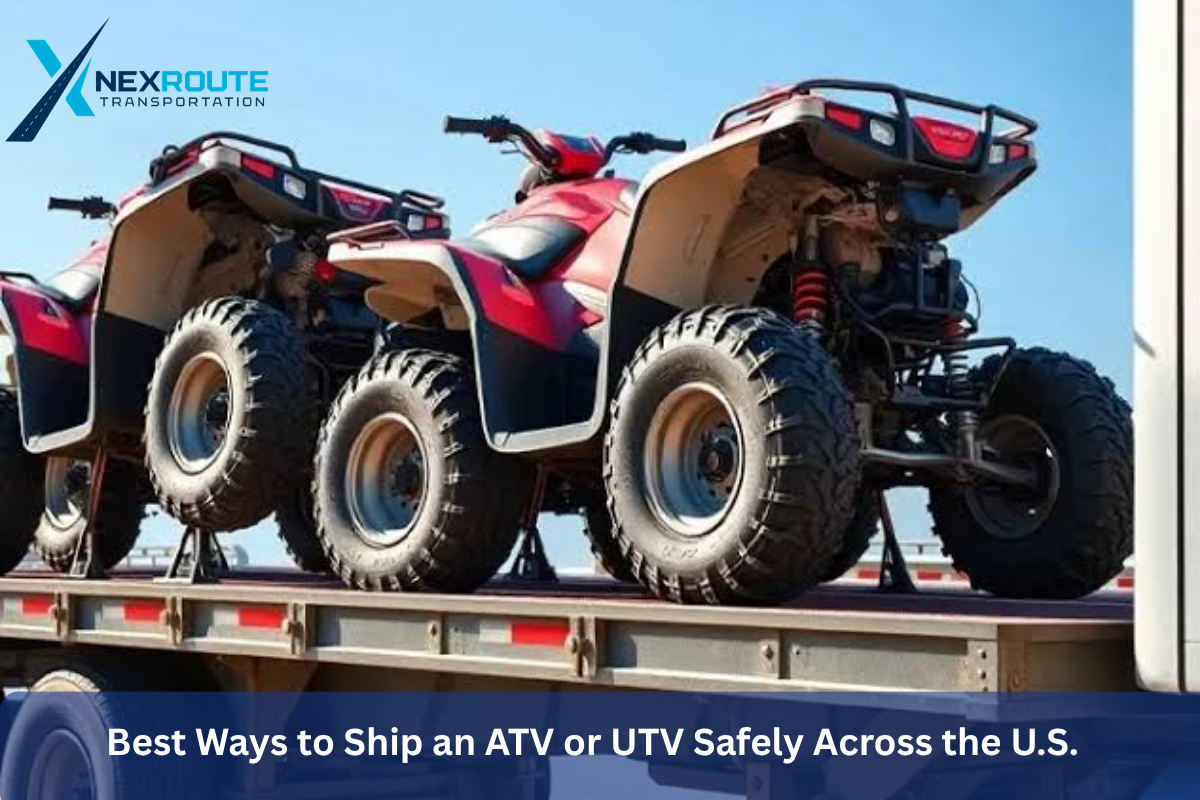
Whether you are relocating, purchasing an ATV from another state, selling a UTV to a distant buyer, or taking your off-road vehicle to a new riding destination, shipping it across the U.S. can be much easier than driving it yourself. Professional ATV and UTV transportation can save time, reduce mileage, and eliminate the hassle of towing a recreational vehicle over a long distance.
However, ATVs and UTVs are different from standard passenger vehicles. Their compact but sometimes wide dimensions, specialized tires, accessories, and off-road design require proper handling and secure loading.
If you are planning to transport an ATV or UTV, choosing the right shipping method and preparing the vehicle properly are important steps. Here are some of the best ways to ship an ATV or UTV safely across the U.S.
1. Use Professional ATV or UTV Transport
For long-distance transportation, one of the safest and most convenient options is hiring a professional vehicle transportation company.
An experienced transporter understands how to handle recreational vehicles and can arrange appropriate equipment for loading and securing your ATV or UTV.
Professional transportation can be especially useful when:
- You are moving across several states
- Your ATV or UTV is not street legal
- You do not own a suitable trailer
- You want to avoid putting extra mileage on your vehicle
- You are purchasing an off-road vehicle from another state
- You need door-to-door transportation
Instead of spending hours or days driving or towing the vehicle yourself, you can arrange transportation from the pickup location to the destination.
2. Choose Between Open and Enclosed Transportation
One of the main decisions when shipping an ATV or UTV is choosing between open and enclosed transportation.
Open Transportation
Open transportation is a common choice for recreational vehicles. The ATV or UTV is transported on an open trailer and secured for the journey.
For many owners, this option provides a practical balance between transportation cost and convenience. It can be a good choice when your primary goal is getting the vehicle safely from one location to another without requiring enclosed protection.
Enclosed Transportation
Enclosed transportation provides additional protection from weather and road debris.
It may be worth considering if you are transporting a high-value, customized, restored, or specialty ATV or UTV.
Enclosed transportation may cost more than open transport, but some owners prefer the added protection for valuable vehicles.
The best option depends on your vehicle, budget, route, and preferred level of protection.
3. Consider the Size and Weight of Your ATV or UTV
Before booking transportation, provide accurate information about your vehicle.
ATVs are generally smaller than UTVs, but UTVs can vary considerably in width, length, and weight. Modifications can also change the vehicle’s overall dimensions.
Tell the transportation company about features such as:
- Oversized tires
- Lift kits
- Roofs
- Windshields
- Spare tire carriers
- Tool racks
- Light bars
- Winches
- Custom bumpers
- Other aftermarket accessories
Accurate measurements help the carrier determine the appropriate transportation setup.
Do not assume that every ATV or UTV will fit the same type of trailer. Providing complete information before pickup can help avoid scheduling and loading problems.
4. Prepare the ATV or UTV Before Pickup
Proper preparation is an important part of safe vehicle transportation.
Start by cleaning the ATV or UTV. Dirt and mud can make it difficult to identify existing scratches, dents, or other damage during the inspection.
Next, remove personal belongings and loose equipment. Items that are not securely attached can move during transportation and may become damaged.
You should also check the vehicle for fluid leaks and mechanical issues. If the ATV or UTV has a known problem, tell the transporter before pickup.
If the vehicle is not operational, make this clear when booking transportation. A non-running ATV or UTV may require additional equipment for loading.
5. Document the Vehicle’s Condition
Before the vehicle is loaded, take clear photographs from multiple angles.
Photograph the:
- Front
- Rear
- Both sides
- Tires
- Wheels
- Body panels
- Windshield
- Accessories
- Existing scratches or dents
Good photographs provide a record of the ATV or UTV’s condition before transportation.
You should also review the vehicle inspection documentation provided during pickup. If existing damage is recorded, make sure the information is accurate before the vehicle leaves.
When the ATV or UTV arrives at its destination, inspect it again and compare its condition with the original documentation.
6. Make Sure the Vehicle Is Securely Loaded
Proper loading and securing are critical to safe transportation.
The ATV or UTV should be positioned appropriately on the trailer and secured using suitable equipment. The carrier should account for the vehicle’s weight, dimensions, tires, suspension, and overall configuration.
Do not try to improvise a long-distance transportation setup without knowing how the vehicle should be secured.
Professional carriers have experience with loading recreational vehicles and can use appropriate restraints and equipment for the shipment.
If you are transporting the vehicle yourself, make sure you understand the trailer’s weight limits and follow the manufacturer’s requirements for tie-down points and load distribution.
7. Ship Your ATV or UTV Door to Door When Practical
Door-to-door transportation can make the shipping process more convenient.
Instead of taking your ATV or UTV to a terminal, the carrier may be able to pick it up at your home, dealership, seller’s location, or another accessible address and deliver it close to your destination.
However, the exact pickup and delivery location may depend on road access and carrier equipment.
Large transportation trucks may not be able to enter narrow residential streets, private roads, or locations with low clearance.
If direct access is difficult, the carrier may arrange a nearby meeting location that is safe and accessible.
8. Tell the Carrier if the ATV or UTV Is Not Running
A non-running vehicle does not necessarily mean it cannot be shipped.
However, loading a non-operational ATV or UTV can require additional equipment or handling.
When requesting a quote, provide accurate information about whether the vehicle:
- Starts
- Moves
- Steers
- Brakes
- Has a working battery
- Can be driven onto a trailer
Giving the transportation company this information in advance allows them to plan for the correct loading procedure.
Unexpected mechanical problems at pickup can create delays if the carrier arrives without the equipment needed to move the vehicle.
9. Understand the Factors That Affect Shipping Cost
The cost of shipping an ATV or UTV across the U.S. varies based on several factors.
Distance is one of the most important considerations. Longer shipments generally involve greater transportation costs, but pricing can also depend on the specific route and carrier availability.
Other factors include:
- Vehicle size and weight
- Pickup and delivery locations
- Open or enclosed transportation
- Vehicle condition
- Seasonal demand
- Fuel costs
- Carrier availability
- Special loading requirements
- Modifications and oversized equipment
Instead of relying on a general online estimate, request a personalized quote using your actual pickup and delivery locations and vehicle details.
A detailed quote can help you understand the expected cost before scheduling transportation.
10. Plan Your Shipping Timeline
Avoid waiting until the last minute if you have a fixed moving or delivery date.
Cross-country transportation can take several days, and the exact timeline can be affected by traffic, weather, road conditions, pickup schedules, and carrier availability.
When planning your shipment, allow some flexibility around the pickup and delivery dates.
If you are shipping an ATV or UTV for a vacation, competition, hunting trip, or other scheduled event, arrange transportation early enough to account for unexpected delays.
11. Choose a Reliable Transportation Company
The transportation company you choose can make a major difference in the overall experience.
Look for a provider that offers clear communication, transparent pricing, appropriate transportation options, and experience handling recreational vehicles.
Before booking, consider whether the company:
- Provides nationwide transportation
- Offers ATV and UTV shipping
- Explains the shipping process clearly
- Provides carrier insurance coverage
- Communicates pickup and delivery expectations
- Can accommodate non-running vehicles when needed
- Provides clear pricing information
- Has experience transporting recreational vehicles
Do not automatically choose the lowest quote. A reliable transportation provider should be able to explain what is included in the service and what factors could affect the final cost.
12. Inspect Your ATV or UTV at Delivery
Your responsibility does not end when the vehicle arrives.
Before the carrier leaves, inspect the ATV or UTV carefully. Check the body, tires, wheels, accessories, and other visible components.
Compare the vehicle with the photographs and inspection documentation from pickup.
If you identify new damage, document it immediately and follow the transportation company’s claims procedure.
Taking a few minutes to inspect the vehicle can make it easier to address any concerns promptly.
Final Thoughts
Shipping an ATV or UTV safely across the U.S. starts with choosing the right transportation method and properly preparing the vehicle. Professional ATV and UTV transportation can be a convenient option when you are moving, purchasing an off-road vehicle, selling one to an out-of-state buyer, or simply taking your recreational vehicle to another part of the country.
Provide accurate vehicle information, document its condition, remove loose belongings, disclose any mechanical problems, and choose a transportation company with experience handling recreational vehicles.
With the right preparation and a reliable carrier, your ATV or UTV can be transported across the country without the stress of a long-distance drive or complicated towing setup.