
Whether you’re relocating across the country, purchasing a new recreational vehicle, or preparing for an extended road trip, choosing the right transportation method is one of the most important decisions you’ll make. Many RV owners ask the same question: Should I choose Open RV transport or Enclosed RV transport? While both options are reliable, each offers unique advantages depending on your RV type, budget, travel distance, and personal preferences.
At NexRoute Transportation, we understand that your RV is more than just a vehicle—it’s your home away from home and a significant investment. That’s why selecting the right transportation option matters. While both shipping methods are handled by experienced carriers, they differ in protection, pricing, and availability. By understanding these differences, you can confidently choose the solution that fits your needs and ensures your RV arrives safely.
In this guide, we’ll compare both transport methods, explain their benefits and drawbacks, discuss costs, and help you decide which option is best for your situation.
Understanding Open RV Transport
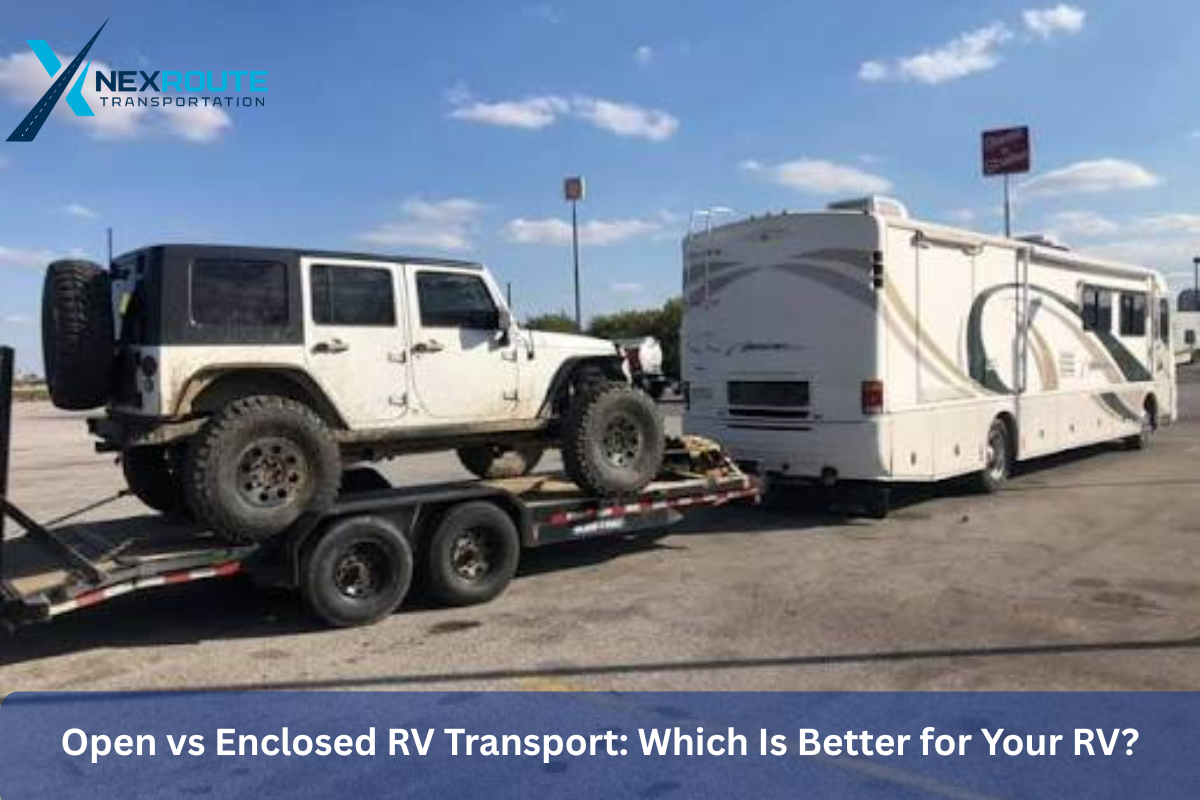
Open RV transport is the most commonly used shipping method throughout the United States. In this option, your RV is loaded onto an open trailer without protective walls or a roof. Since the trailer is exposed, your RV experiences normal road conditions and weather during transit.
This transportation method is widely used because it is affordable, readily available, and efficient for most standard recreational vehicles. Many RV transport companies use open carriers because they can accommodate more vehicles, making scheduling faster and transportation more cost-effective.
For most RV owners, especially those transporting travel trailers or standard motorhomes, open transport offers a dependable solution. Although your RV remains exposed to rain, dust, and sunlight, professional carriers follow strict safety procedures to ensure secure loading and delivery.
What Is Enclosed RV Transport?
Unlike open carriers, Enclosed RV transport places your recreational vehicle inside a fully covered trailer. This provides complete protection from weather conditions, road debris, dirt, and other outside elements.
Enclosed shipping is generally recommended for luxury motorhomes, vintage RVs, custom-built campers, and high-value recreational vehicles. Owners who want maximum protection often consider this premium option worth the additional investment.
Although enclosed carriers cost more and may have limited availability, they significantly reduce exposure to environmental hazards. For collectors and luxury RV owners, this added peace of mind often outweighs the higher RV transport cost.
Comparing Protection Levels
One of the biggest differences between both options is the level of protection they provide.
With Open RV transport, your vehicle is securely strapped onto the trailer, but it remains exposed throughout the journey. While experienced drivers minimize risks, weather, dust, insects, and road debris can still affect the exterior.
On the other hand, Enclosed RV transport shields your RV from outside conditions. Whether you’re shipping across rainy regions or dusty highways, the enclosed trailer acts as a protective barrier.
If appearance and preservation are your top priorities, enclosed shipping offers unmatched protection. However, if your RV is designed for regular travel and outdoor use, open transport usually provides sufficient security.
Cost Comparison: Which Option Fits Your Budget?
Budget plays a major role when choosing between shipping options.
Generally, Open RV transport costs less because open trailers transport multiple vehicles simultaneously. Greater carrier availability also creates competitive pricing, helping customers save money.
Meanwhile, Enclosed RV transport commands a premium price due to specialized equipment, fewer available carriers, and increased protection.
Several factors influence overall RV transport cost, including:
- Distance
- RV dimensions
- Weight
- Seasonal demand
- Pickup and delivery locations
- Fuel prices
- Carrier availability
If affordability is your priority, open transport is usually the better choice. However, if protecting a valuable investment matters most, enclosed shipping may deliver better long-term value.
Which RV Owners Benefit Most From Each Option?
Every RV owner has different transportation needs.
Open transport is ideal for:
- Standard travel trailers
- Fifth wheels
- Everyday motorhomes
- Seasonal relocations
- Budget-conscious customers
- Routine Long-distance RV transport
Enclosed shipping is best suited for:
- Luxury motorhomes
- Vintage recreational vehicles
- Custom-built RVs
- Collector models
- Recently restored campers
- High-value recreational investments
Choosing the right service depends on your priorities. While cost-conscious owners often prefer open transport, premium RV owners usually appreciate the additional protection offered by enclosed carriers.
Convenience and Delivery Options
Modern RV shipping services provide flexible scheduling to simplify the shipping experience.
Many customers choose Door-to-door RV transport, where the carrier picks up the RV directly from the requested location and delivers it as close as legally possible to the final destination. This option saves time while reducing unnecessary travel.
Professional carriers also offer Nationwide RV transport, making cross-country moves much easier. Whether you’re relocating to Florida, California, Texas, or anywhere else in the United States, nationwide carrier networks simplify planning.
Reliable Professional RV transport companies also provide shipment tracking, insurance coverage, inspection reports, and responsive customer service throughout the transportation process.
How to Choose the Right RV Transport Company
Not every transporter offers the same level of service.
Before booking, research multiple RV transport companies and compare:
- Licensing and registration
- Insurance coverage
- Customer reviews
- Years of experience
- Delivery timelines
- Pricing transparency
- Communication quality
Experienced companies specializing in Recreational vehicle transport understand the unique requirements of RV shipping. They use specialized equipment, trained drivers, and proven loading procedures to reduce transportation risks.
Choosing an experienced carrier often makes a bigger difference than choosing between open and enclosed transport alone.
Preparing Your RV Before Shipping
Proper preparation helps ensure Safe RV shipping regardless of the transport method you select.
Before pickup:
- Wash the exterior.
- Document existing damage.
- Remove personal belongings.
- Empty holding tanks.
- Secure loose interior items.
- Disconnect propane tanks if required.
- Check tire pressure.
- Retract awnings and slide-outs.
- Remove aftermarket accessories if necessary.
Taking these simple precautions protects both your RV and the transportation team while helping prevent delays.
Open vs Enclosed RV Transport: Which One Wins?
There isn’t a universal winner because every transportation situation is different.
If affordability, faster scheduling, and widespread availability matter most, Open RV transport is an excellent option. It delivers dependable transportation for most recreational vehicles while keeping shipping costs manageable.
However, if your RV represents a major financial investment or has sentimental value, Enclosed RV transport provides superior protection throughout the journey.
Ultimately, your decision should balance budget, vehicle value, travel distance, and personal comfort level.
Final Thoughts
Choosing between Open RV transport and Enclosed RV transport ultimately comes down to your priorities. If you’re looking for an affordable, efficient solution for a standard RV, open transport is an excellent choice. If your recreational vehicle is a high-value investment that requires extra protection, enclosed transport offers unmatched security and peace of mind.
No matter which option you choose, working with a trusted provider like NexRoute Transportation ensures your RV is handled with professionalism from pickup to delivery. Whether you need RV moving services, RV hauling services, RV delivery services, RV trailer transport, or complete Recreational vehicle transport, selecting an experienced carrier is the best way to ensure a smooth, stress-free shipping experience. Contact NexRoute Transportation today to receive a personalized quote and confidently ship your RV anywhere in the country.
Frequently Asked Questions
Is Open RV transport safe?
Yes. Professional carriers follow strict loading procedures, making open transport a safe and dependable option for most RV owners.
Is enclosed transport worth the extra cost?
For luxury, vintage, or custom RVs, enclosed transport offers valuable protection that often justifies the additional expense.
How is RV transport cost calculated?
Pricing depends on distance, RV size, weight, season, fuel prices, route accessibility, and carrier availability.
How long does Long-distance RV transport take?
Transit times vary, but most nationwide shipments are completed within several days to two weeks depending on the route.
Do RV shipping services provide insurance?
Yes. Reputable carriers include insurance coverage, although coverage limits vary by company.
Can I choose Door-to-door RV transport?
Absolutely. Most carriers offer door-to-door service whenever road conditions and local regulations allow.
Are RV hauling services available nationwide?
Yes. Many companies, including NexRoute Transportation, offer Nationwide RV transport across the continental United States.
What is the best option for expensive RVs?
Enclosed transport is generally recommended for luxury, collector, or custom-built recreational vehicles because it provides maximum protection.