
Cross country car shipping gets stressful when a low quote turns into a vague pickup window, unclear coverage, or a truck that cannot reach your street. The miles are not usually the problem; the unknowns are.
You need straight answers before keys change hands: who moves the vehicle, when payment is due, and what gets documented at pickup. A quick reality check:
- Confirm whether the quote can change after a carrier is assigned.
- Photograph every panel before the driver arrives (even the bumper corners).
- Plan for a nearby meeting point if your street cannot handle a large trailer.
Know the process, protect the vehicle, move on.
What Cross Country Car Shipping Actually Means
Cross country car shipping is professional transport over a long distance, usually from one state to another or all the way coast to coast. It is not local towing, and it is not a quick dealer drop. You’re hiring a logistics service to move a vehicle safely and predictably without putting miles on it yourself.
Most cross country vehicle transport is handled door to door. In plain terms, that means pickup and delivery are arranged as close to your addresses as the truck can legally and safely get. If your street is narrow, steep, or packed with low branches, the driver may meet you nearby in a larger parking lot or on an easier access road. That’s normal.
You’ll also run into two main trailer types right away:
- Open transport puts your car on an open carrier, the kind you see on the highway loaded with multiple vehicles.
- Enclosed transport moves the car inside a covered trailer for more protection from weather and road debris.
A lot of people get hung up on whether a company is a broker or a carrier. Here’s the practical answer: many companies that help ship car across the country work as brokers, meaning they coordinate with licensed carriers and manage the shipment. That setup is common in long distance auto transport. It only becomes a problem when nobody explains who is doing what.
A good nationwide car shipping service should feel managed, not mysterious.
You’re not handing your keys into the void. You’re setting up a transport job with moving parts that should be explained clearly.
Why Shipping a Car Across the Country Feels Stressful
Let’s be honest about it. The stress usually starts before the vehicle even moves.
People worry about hidden fees, missed pickup windows, damage, weak communication, and the big one: not knowing who is actually handling the car. Those are fair concerns. Most of the anxiety in cross country car shipping comes from poor visibility, not from the distance itself.
A few problems show up again and again:
- A low quote turns into a higher number after booking
- Someone wants a large payment before a vehicle is even scheduled
- Insurance answers sound fuzzy
- A sales rep promises exact dates too early
- Nobody explains what pickup and delivery actually look like
That last one matters more than people think. If you don’t know what happens at pickup, every text message feels loaded. If you don’t know how delivery works, even a normal schedule shift feels like a warning sign.
This is where people make a costly mistake. They chase the cheapest headline number instead of the clearest process. Cheap isn’t cheap if the price moves later or the terms stay vague. For long distance auto transport, accountability beats optimism every time.
So don’t ask only, “How much is it?” Ask, “How does this job get handled, when is payment due, what protection is in place, and what happens if timing shifts?” That’s how you lower stress before the truck ever shows up.
How Cross Country Car Shipping Works From Quote to Delivery
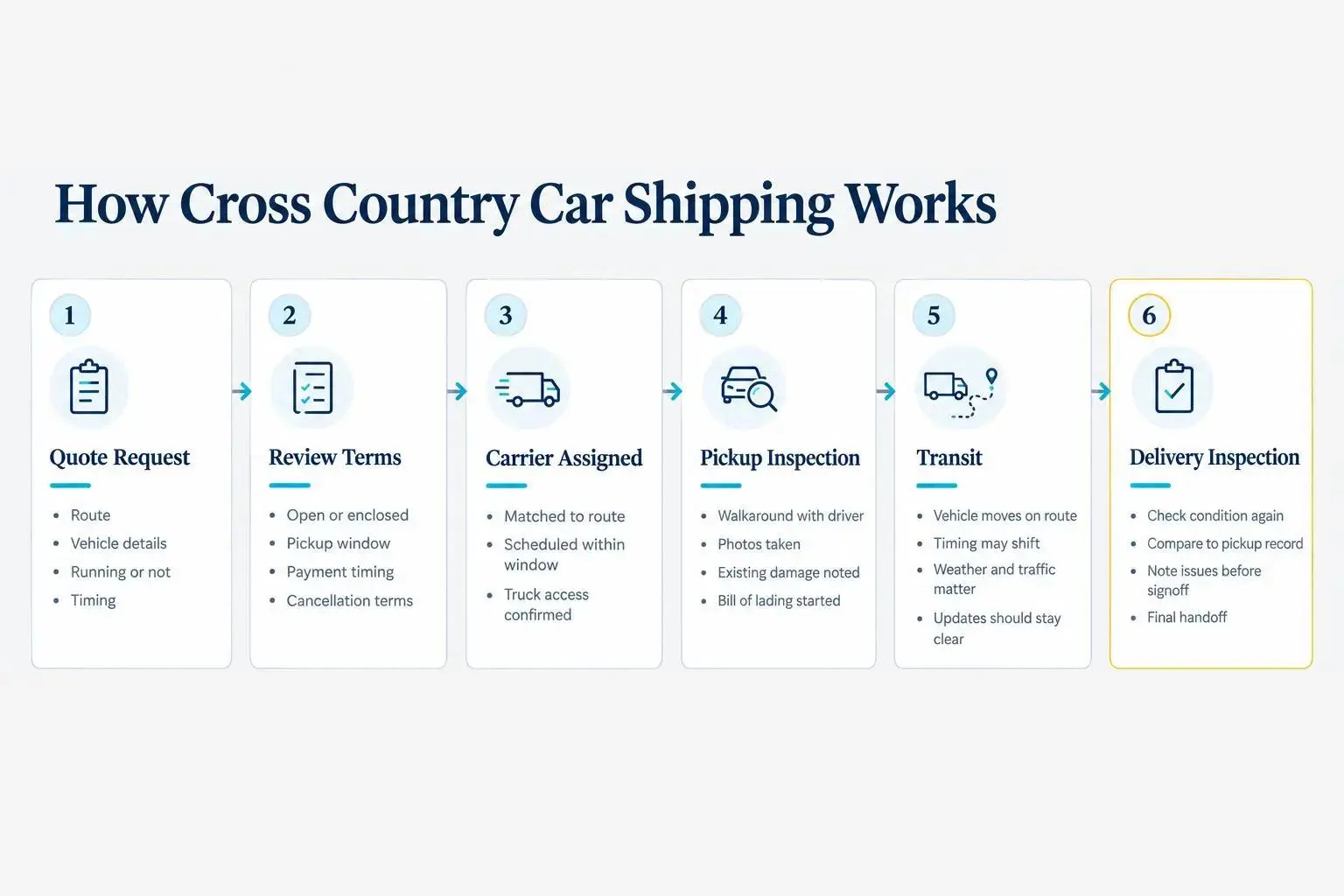
Once you understand the sequence, the whole thing gets easier. The process isn’t complicated, but it does have a few points where details matter.
Step 1: Request a quote
You’ll usually provide:
- Pickup and delivery locations
- Vehicle year, make, and model
- Whether it runs and drives
- Your timing
Accuracy matters here. A compact sedan and a lifted heavy duty truck do not take up the same space on a trailer. A non running car may need winch loading. If the details are wrong at the start, the quote can be wrong too.
Step 2: Review the transport setup
Before you book, slow down and look at the terms.
Check the trailer type, open or enclosed. Confirm what door to door means on your route. Ask about the pickup window instead of assuming it is a fixed appointment. Look at payment timing and cancellation terms. This is where people either get clarity or collect surprises.
Step 3: Carrier assignment and scheduling
After booking, the shipment needs to be matched with a carrier based on route, trailer type, and timing. This part depends on real truck availability, not wishful scheduling.
A little flexibility often helps. If you can give a wider pickup window, your car may move sooner or at a better price. Tight demands usually reduce options. That’s not a sales line. That’s trucking.
Step 4: Pickup inspection
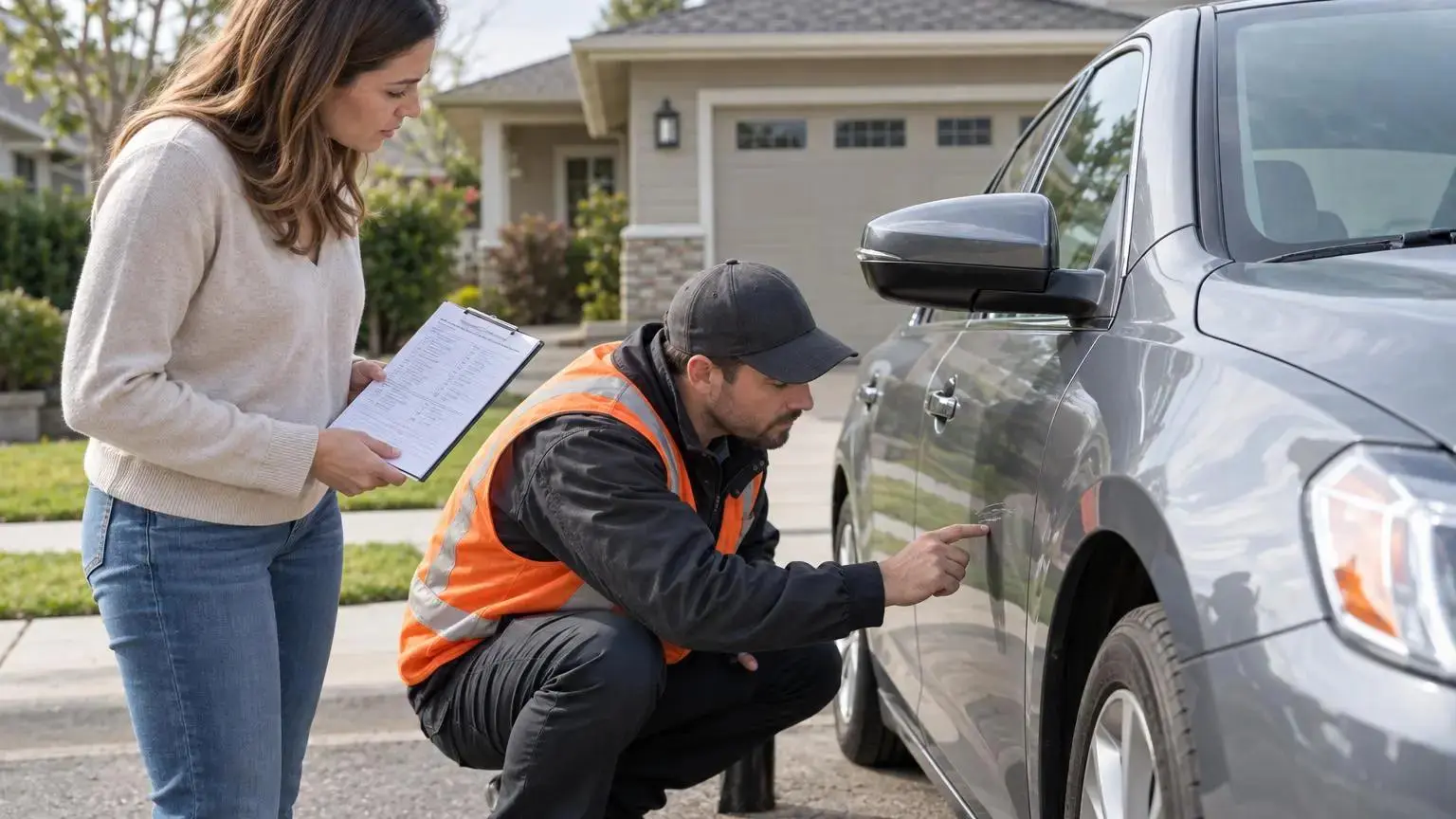
At pickup, the vehicle condition is documented before loading. This is one of the most important protection steps in the whole shipment.
Walk around the car with the driver. Note existing scratches, chips, or dents. If something is already there, it should be marked before the vehicle goes on the trailer. Rushing through this step is a mistake.
Step 5: Transit
During transit, the car is moving on a route that may include several vehicles. Updates should be clear, but exact timing can shift with weather, traffic, road issues, and schedule changes along the route.
That doesn’t mean the process is broken. It means transport operates on windows, not minute by minute precision.
Step 6: Delivery inspection
When the car arrives, inspect it again before final signoff. Compare the condition to the pickup documentation. If something needs to be noted, do it before closing out the delivery.
At NexRoute Transportation, our Nationwide Open and Enclosed Auto Transport is built around the places where stress usually starts. We arrange door to door shipping, include carrier insurance coverage, keep pricing transparent, and don’t require upfront payment until pickup. Those details matter because they remove a lot of the guesswork people hate.
Open vs Enclosed for Long Distance Auto Transport
This choice is usually simpler than it looks. Open transport is the standard. Roughly 95 percent of vehicles move this way, and for most everyday cars, it’s the right call.
If you’re shipping a sedan, SUV, or pickup, open transport usually makes sense because:
- It costs less
- More carriers are available
- Major routes are easier to schedule efficiently
That last point gets overlooked. Wider carrier availability often means smoother scheduling on common interstate lanes. If you’re moving a regular vehicle, paying more for enclosed just because it sounds better usually isn’t money well spent.
Enclosed transport is different. It makes more sense for:
- Classic cars
- Luxury or exotic vehicles
- High value vehicles
- Owners who want more shielding from weather and road debris
For coast to coast car shipping, enclosed can be worth the premium if the vehicle value is high enough that extra protection feels sensible, not emotional. That’s the right lens. Not prestige. Risk tolerance.
Expect enclosed shipping to cost more, often around 40 to 60 percent higher than open transport depending on route and trailer availability. That’s not a small difference, so the decision should match the car, the budget, and how cautious you want to be.
Buy the level of protection your vehicle calls for, not the one that sounds impressive.
What Cross Country Car Shipping Costs and What Actually Moves the Price
The biggest pricing mistake people make is treating mileage like the whole story. It isn’t. Cross country car shipping prices move with route demand, timing, fuel, equipment, and the vehicle itself.
The main drivers are pretty straightforward:
- Distance and how active that route is
- Vehicle size and weight
- Running versus non running condition
- Open versus enclosed trailer
- Seasonal demand
- Rural or hard to reach pickup and delivery points
Here are useful planning ranges for ballpark budgeting:
- Open carrier, 0 to 500 miles: about $1.00 to $1.50 per mile
- Open carrier, 500 to 1,500 miles: about $0.75 to $1.00 per mile
- Open carrier, 1,500 plus miles: about $0.50 to $0.75 per mile
- Enclosed carrier, 0 to 500 miles: about $1.50 to $2.50 per mile
- Enclosed carrier, 500 to 1,500 miles: about $1.00 to $1.50 per mile
- Enclosed carrier, 1,500 plus miles: about $0.75 to $1.25 per mile
A non running vehicle often adds another $150 to $200 because loading it may require extra equipment and time.
One useful detail: popular interstate lanes can cost less per mile than remote routes, even when the total trip is longer. A truck running a strong corridor can load and unload more efficiently than one working around a remote pickup with limited access. People don’t expect that, but it’s common.
If you need to ship car across the country, budget for the full job, not a teaser estimate. Ask what is included, when the rate could change, and whether any access issues might affect the route. The lowest quote on paper isn’t always the lowest final cost.
What to Expect for Pickup Windows, Transit Time, and Delivery
Vehicle shipping runs on windows. That’s normal, and frankly, it’s healthier to understand that up front than to be sold a fantasy.
Pickup windows exist because carriers are loading multiple vehicles, routes shift with geography, traffic changes the day, and weather still gets a vote. Coast to coast car shipping has more moving parts than a shorter route, so realistic communication matters even more.
Door to door also deserves a reality check. The truck comes to your address when it can. If your street is too tight, steep, restricted, or unsafe for a large carrier, you’ll meet nearby at a safer location. That isn’t a downgrade in service. It’s how the job gets done without creating a different problem.
A little flexibility helps in two ways:
- It can reduce stress because you’re working within how transport actually operates.
- It may improve pricing or speed up scheduling because more carriers can fit your order.
When you review a quote, ask three timing questions:
- What is the pickup window?
- What is the estimated transit time once the vehicle is loaded?
- What happens if weather or route conditions push things back?
If those answers sound slippery, pay attention. Clear timing language beats confident timing language.
How Your Vehicle Is Protected During Cross Country Vehicle Transport
Protection isn’t one thing. It’s a stack of things, and if one layer is missing, you’ll feel it.
The three protections that matter most in nationwide car shipping service are:
- Carrier insurance coverage
- Condition documentation at pickup and delivery
- Clear payment structure and written terms
Start with insurance. Ask for proof of active coverage and make sure you understand what applies before the vehicle is loaded. If someone gets vague here, stop and press for clarity. Insurance should not feel like a side topic.
Then there’s the inspection report, often called the bill of lading. It records the vehicle’s condition before transport and again at delivery. If a damage claim ever needs to be filed, that document matters. It protects the customer and the carrier, which is exactly why it should be taken seriously.
Do your own part too. Take dated photos from multiple angles before pickup. A quick walkaround with your phone takes minutes and can save a lot of arguing later.
Payment terms matter more than people think. A demand for full payment long before pickup tends to raise anxiety for a reason. A structure where payment isn’t required until pickup feels more accountable because the transaction is tied to actual scheduling, not a promise floating in space.
Serious providers should also be plain about pricing and fees. Hidden charges don’t just hurt your budget. They weaken trust.
How to Choose a Nationwide Car Shipping Service Without Regret
If you’re comparing companies, keep the screening simple and sharp. You do not need a polished pitch. You need straight answers.
Ask these questions before booking:
- Are you a carrier, a broker, or both depending on the shipment?
- What trailer type is included in this quote?
- Is the quote fixed, or under what conditions can it change?
- When is payment due?
- What insurance documentation can you provide?
- How will updates be handled during transit?
Good answers tend to sound boring. That’s a good sign.
Look for clear written terms, transparent pricing, realistic scheduling language, and direct answers about insurance and access limits. Also look for restraint. If someone is pushing hard for an immediate booking before you’ve had your questions answered, that’s not confidence. That’s pressure.
A few red flags deserve zero benefit of the doubt:
- A quote far below the rest of the market
- No clear explanation of fees
- Exact date promises before a carrier is assigned
- No clarity on who is moving the vehicle
- Demands for money before anything is actually scheduled
If you’re evaluating options, our Nationwide Open and Enclosed Auto Transport reflects the criteria worth caring about: door to door shipping, included carrier insurance coverage, transparent pricing, and payment only after pickup.
The right choice is the service that makes the process clearer, not louder.
How to Prepare Your Car Before You Ship It Across the Country
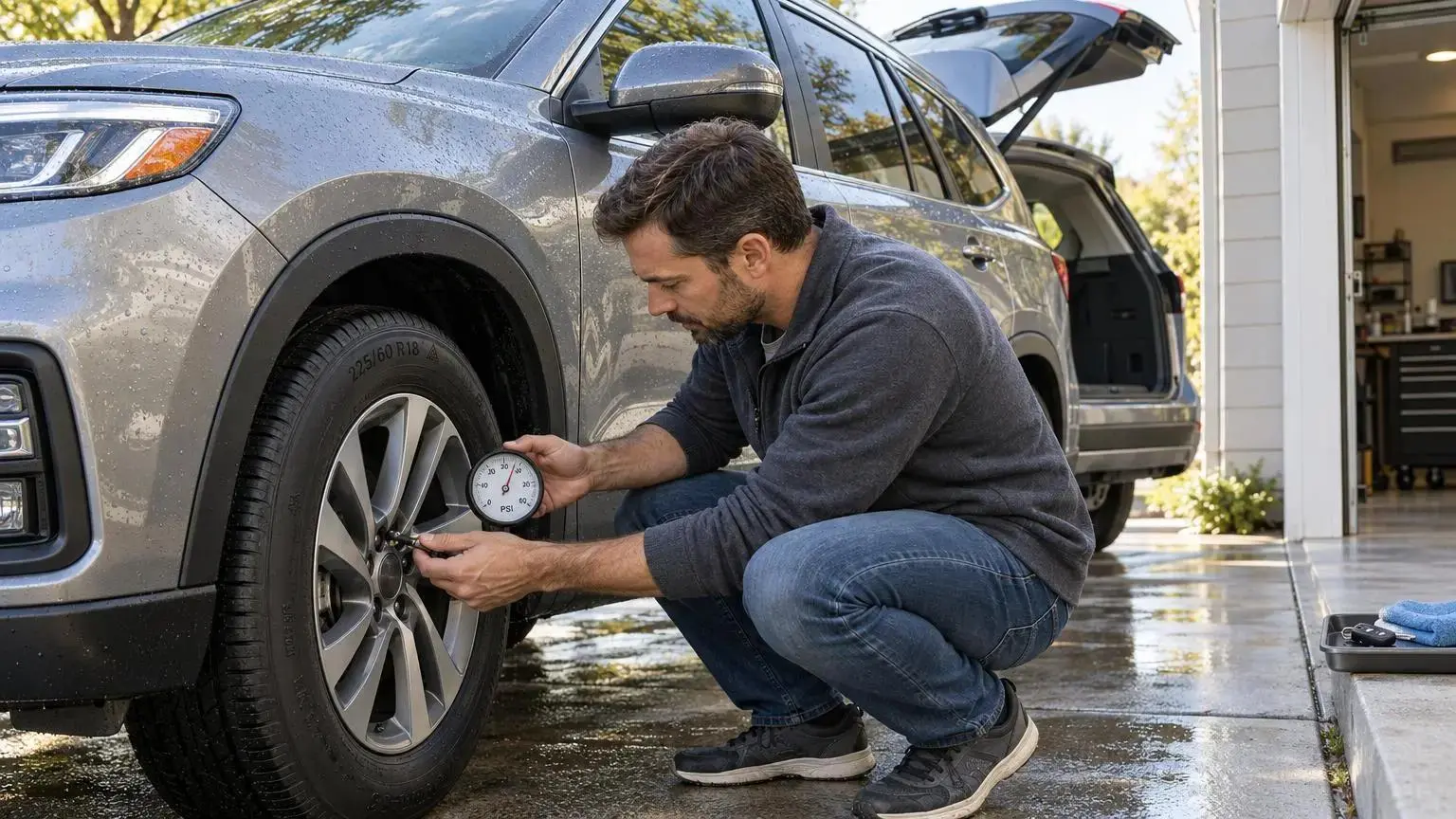
Preparation is where you control the easy stuff. Don’t waste that advantage.
Use this checklist before pickup day:
- Wash the vehicle so existing damage is easier to spot
- Take clear photos from all sides
- Remove valuables and personal belongings
- Leave only a small amount of fuel, enough for loading and unloading
- Disable alarms if you can
- Check for leaks, battery issues, and tire problems
- Make sure the keys are ready and accessible
Personal items are often restricted or discouraged, and any allowance depends on the carrier. Don’t assume your trunk doubles as moving storage.
If the vehicle doesn’t run, say so early. The right equipment has to be arranged in advance. The same goes for oversized vehicles or modifications that affect height or clearance.
One more simple step: confirm pickup and delivery contacts and mention any access notes before the truck arrives. Gate codes, narrow streets, apartment lots, HOA restrictions, all of that matters more on pickup day than it did when you first filled out the quote form.
A prepared vehicle moves with less friction. That’s the point.
Common Mistakes That Make Car Shipping More Complicated Than It Needs to Be
Most shipping problems don’t start with disaster. They start with a small bad assumption.
People get themselves into avoidable trouble when they:
- Choose by lowest price without checking what is actually included
- Treat estimated windows like guaranteed appointments
- Wait too long to book during busy periods
- Forget to disclose that the car doesn’t run, is oversized, or has modifications
- Leave valuable or fragile items inside
- Skip the inspection because the driver seems in a hurry
- Assume every door to door move can happen right at the house
- Fail to ask how delays, changes, or cancellations are handled
None of this is about blaming the customer. It’s about removing the usual failure points.
The rushed inspection is a big one. People feel awkward holding things up, so they sign quickly. That’s exactly the wrong moment to rush. The vehicle condition check is where you protect yourself.
When Professional Transport Makes More Sense Than Driving
Sometimes driving it yourself still makes sense. But a lot of the time, it doesn’t.
Professional transport is often the better move when you’re relocating for work or family, buying or selling a vehicle in another state, sending a car to a student or relative, making a seasonal move, or trying to protect a classic or high value vehicle from extra mileage.
The hidden costs of self driving add up fast:
- Fuel
- Hotels
- Meals
- Time away from work
- Wear and tear
- Added mileage and depreciation
People tend to compare shipping against gas money and stop there. That’s too narrow. Long distance auto transport is often about reducing hassle, preserving the vehicle, and buying back several days you would have spent chasing the road.
Sometimes the smartest move is the one that keeps both your time and your car out of unnecessary trouble.
Conclusion
Cross country car shipping gets a lot less stressful when the process is clear from the start. A transparent quote, realistic timing, documented inspections, active insurance coverage, and payment tied to actual pickup change the whole experience. Suddenly it feels like a managed job instead of a gamble.
That’s where you want to be: informed, calm, and able to compare services using real trust signals instead of guesswork.
If you’re getting ready to move a vehicle, gather the route details, decide whether open or enclosed transport fits the car, and request a written quote that explains timing, coverage, and total cost in plain language. Clarity is the product. The truck ride comes after that.