
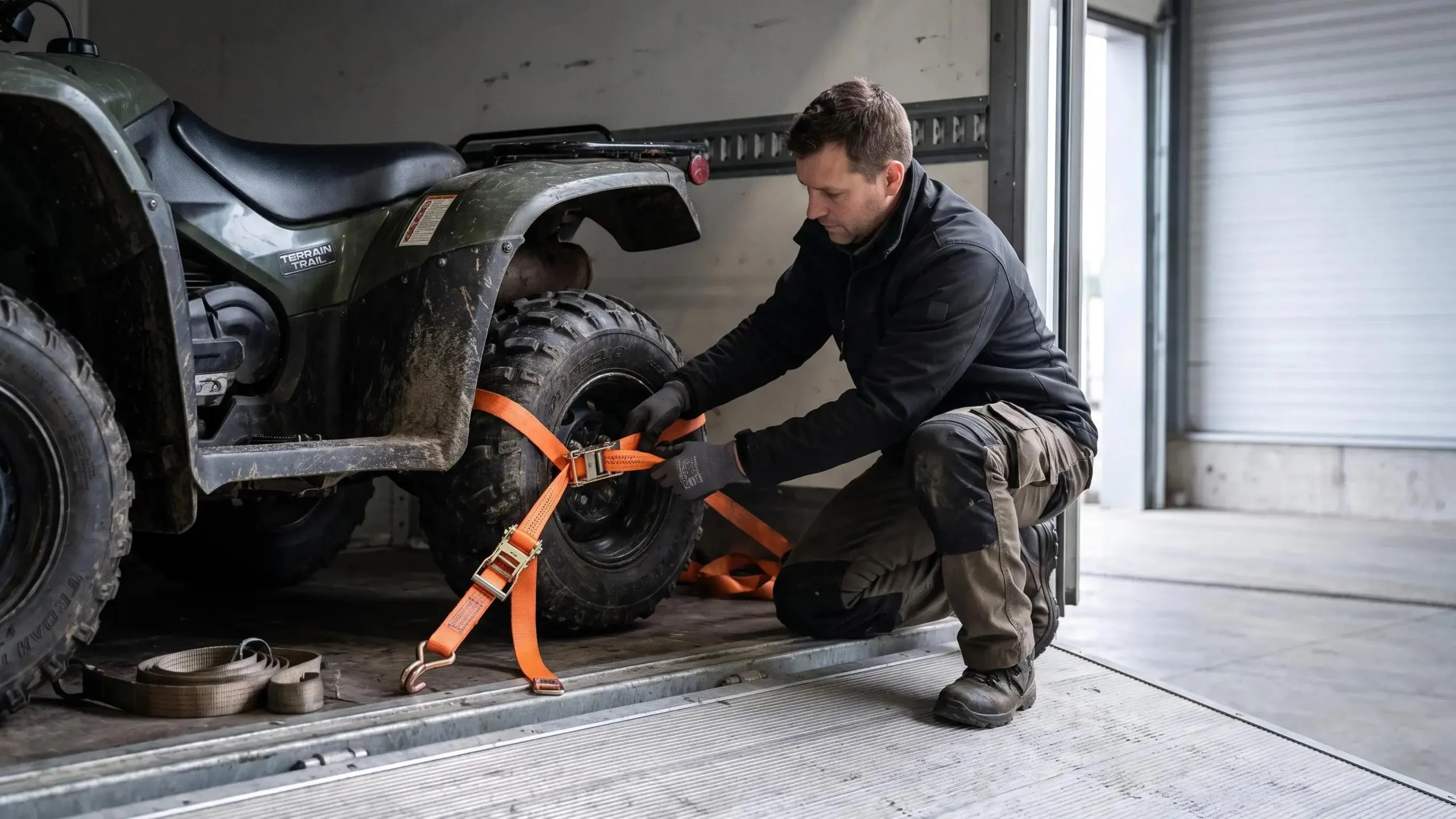
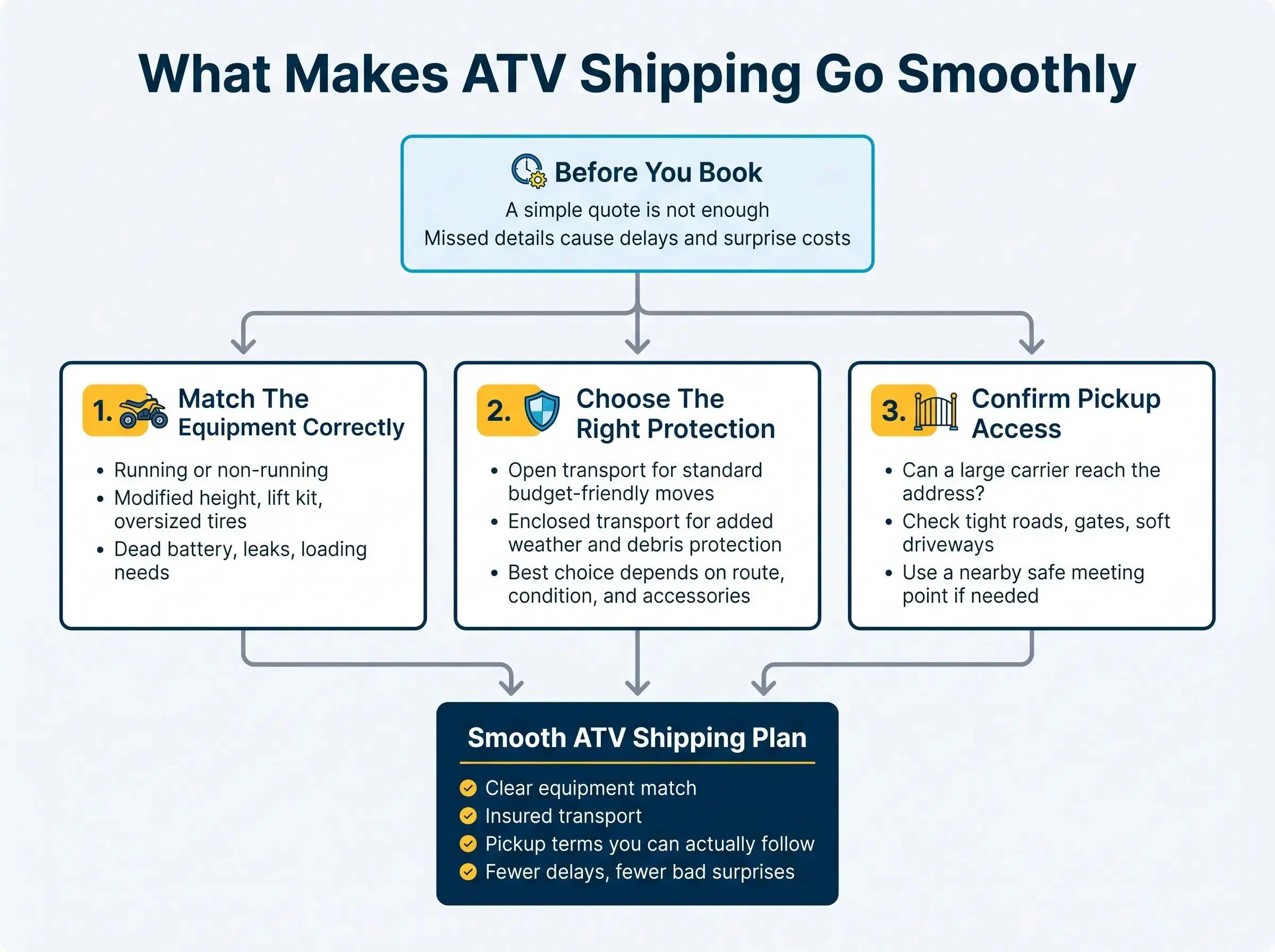
ATV shipping gets stressful when the quote sounds simple, then nobody asks about the lift kit, dead battery, or whether a trailer can reach your road. Those missed details are where delays and bad surprises start.
What matters is clear equipment matching, insured transport, and pickup terms you can actually follow. A clean plan beats a cheap number (every time).
Before you book, nail down:
- Your ATV’s running condition and modified height
- Open versus enclosed protection for the route
- Whether pickup space fits a large carrier
Move it without guessing.
Why ATV Shipping Feels Stressful and What Reliable Service Looks Like
Most people don’t come looking for atv shipping because they think it’ll be fun. They come in tense. They’re worried about hidden fees, a vague pickup window that blows up their week, a carrier change they weren’t told about, or damage to a machine they either just bought or actually depend on.
The stress usually isn’t the shipping itself. It’s the fog around it.
A reliable atv delivery service feels different right away. You should be able to see the basics without squinting:
- clear pricing instead of mystery add-ons
- insured transport during the move
- realistic timing, not fantasy dates
- a process you can follow from quote to delivery
- direct communication about pickup, access, and handoff
Door-to-door coordination matters more with ATVs than people expect. A lot of these moves happen during a household relocation, an out-of-state purchase, or when someone needs equipment sent to a second property, hunting land, or a trail area. You don’t want to decode a terminal system or figure out how to drag a machine across town after it arrives.
Good shipping should lower your workload, not move it around.
By the end of this guide, you should know what credible atv shipping looks like, what questions to ask, and where people get tripped up. First-time shipper or not, the process should feel organized once the terms are clear.
What ATV Shipping Includes and When It Makes Sense
At a practical level, atv shipping is professional transport for an all-terrain vehicle across a short route, a long interstate route, or a full cross-country move. The machine gets picked up, loaded onto the right trailer, moved by a licensed carrier, and delivered as close to your chosen location as access safely allows.
This often overlaps with utv transport and side by side shipping. That’s normal. Most customers aren’t moving “just an ATV” in some neat little category. They’re moving off-road equipment, and the real question is size, condition, route, and trailer fit.
People usually book transport for a few very specific reasons:
- They bought from a dealer, auction, or private seller in another state.
- They’re moving households, sometimes on a military timetable.
- They want a machine at a second home or trail property without towing it themselves.
- They need delivery to a ranch, hunting property, event site, or work location.
- They sold a unit and need to ship a four wheeler to the buyer.
There comes a point where towing it yourself stops being practical. Long distance is the obvious case, but not the only one. If you’re moving more than one vehicle, lack the right trailer setup, or don’t want to spend two days on the road guarding one machine, shipping starts to make more sense fast.
We’ve seen people underestimate the hassle of self-towing. The trailer may be fine. Your schedule may not be.
ATVs also sit inside the broader world of recreational vehicle transport. They often move alongside motorcycles, golf carts, UTVs, or utility equipment. That’s useful because it means they aren’t unusual freight. They need proper handling, yes, but they aren’t some special case the transport world can’t deal with.
The Types of Off-Road Vehicles Commonly Shipped
Before you ask for a quote, get clear on what you’re actually moving. “ATV” covers a lot of ground, and the details affect loading, trailer choice, and price.
The most common categories include:
- sport ATVs and racing quads
- utility ATVs used for work, land management, or hunting
- youth ATVs
- UTVs and side-by-sides used for recreation, ranch work, or jobsites
- older, vintage, or custom-built off-road machines
That difference matters. A standard four wheeler is one thing. A side-by-side with a roof, bigger tires, rack system, and added lights is another. Same industry, different load plan.
Pickup and delivery points are usually pretty ordinary:
- residential addresses
- dealerships
- auctions
- storage facilities
- commercial properties
Single-unit shipments are common, but so are multi-unit moves. Families often send two or three machines at once. Businesses and landowners may move several utility units together. When multiple ATVs can be loaded efficiently, per-unit pricing may work out better than people expect.
One detail gets missed all the time: modifications. Lift kits, oversized tires, roof accessories, racks, light bars, and custom bumpers change more than appearance. They change dimensions, clearance, loading angle, and sometimes the trailer type that makes sense.
If your machine is taller or wider than stock, say it early. That one phone call can save a bad pickup day.
Open vs Enclosed Transport for ATV and UTV Moves
This is where people tend to overcomplicate things. Open and enclosed both have a place. Neither is “the best” in every case.
Open transport is the budget-conscious option for many standard ATV shipments. If you’re moving a used trail machine or a work ATV and normal road exposure isn’t a big concern, open transport is often the sensible choice.
Enclosed transport gives you more protection from weather, dust, and road debris. It’s usually worth a harder look when the machine is newer, custom, collectible, or loaded with expensive accessories.
A simple way to think about it:
Open transport usually fits when
- the ATV is used and built for rough conditions anyway
- you’re moving a work unit, not a showpiece
- budget matters more than shielding from the elements
- the route is straightforward and conditions are moderate
Enclosed transport deserves attention when
- you bought a new unit from a dealer
- the machine has custom paint, expensive add-ons, or delicate extras
- it’s a race, show, or collector vehicle
- the route is long and likely to run through rough weather
Side by side shipping often needs more care than a standard quad. UTVs are larger, sometimes awkwardly accessorized, and more likely to have soft tops, exposed components, windshields, mirrors, doors, or cargo systems that need thought before loading. A bad fit isn’t just inconvenient. It can force a last-minute equipment change.
Don’t choose the trailer type by habit. Choose it by condition, route, and how much exposure you’re willing to accept. That’s the real decision.
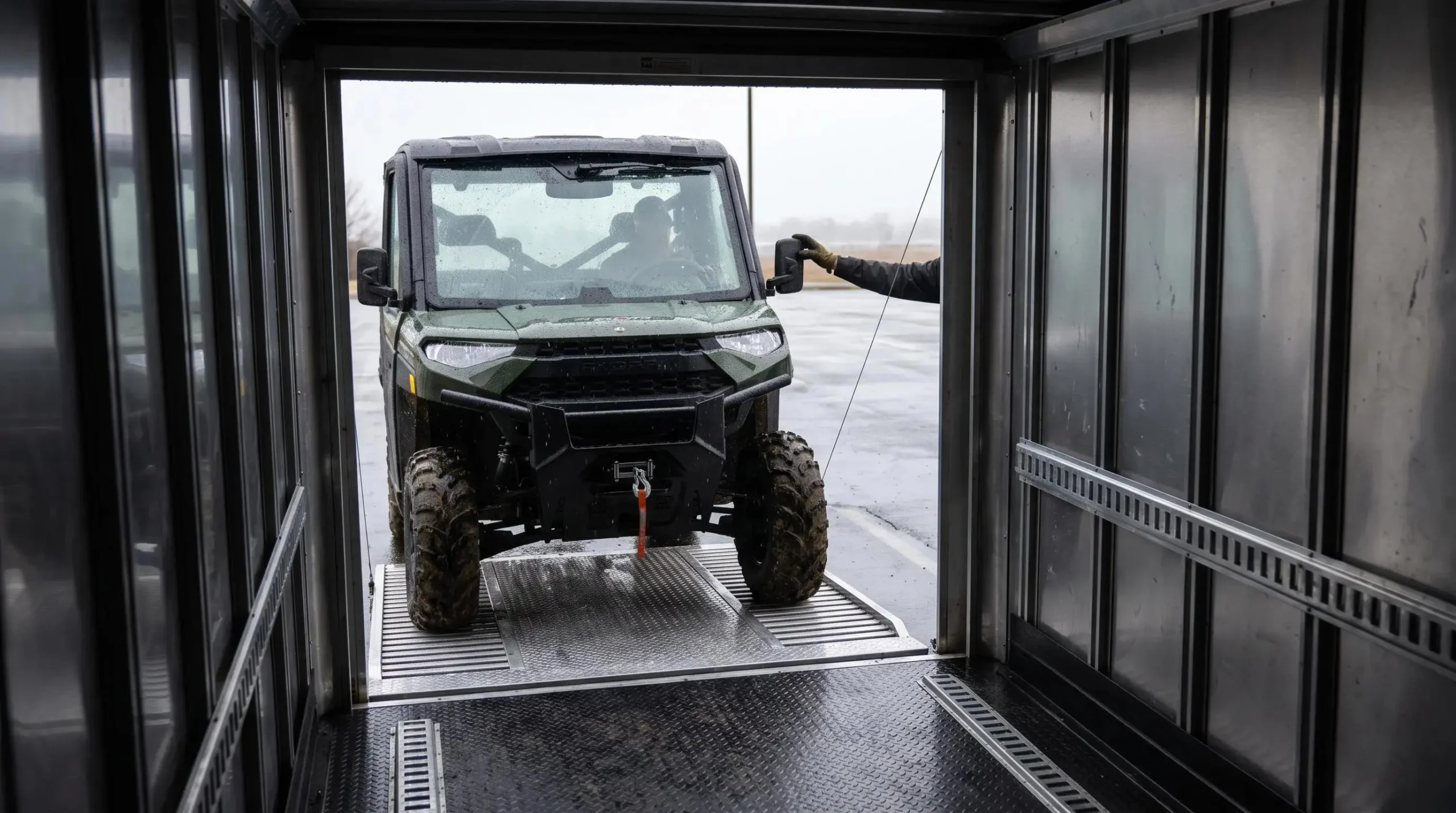
How Door-to-Door ATV Delivery Service Works Step by Step
A good process should feel boring in the best way. You know what’s next, who’s handling it, and what you need to provide.
Here’s how door-to-door atv shipping usually works.
1. Share the basics
Start with the core details:
- pickup and delivery locations
- vehicle type
- running or non-running status
- approximate dimensions if modified
- preferred timing
If the unit has oversized tires, a roof, or a lift, mention it now. Waiting until pickup is how simple jobs turn messy.
2. Carrier matching
This part matters more than most customers realize. A broker coordinates with licensed carriers and matches the shipment to the right route and trailer type. That’s especially useful for off-road equipment because ATV, UTV, and side by side shipping don’t all fit the same way.
At NexRoute Transportation, we arrange nationwide open and enclosed auto transport for vehicles and equipment, including ATVs and similar units. The point isn’t to make the process sound fancy. It’s to match the machine to a carrier that can actually move it correctly.
3. Scheduling and confirmation
Before pickup, you should get communication about timing and any access issues. If your road is tight, your driveway is soft, or the property has a gate code, this is when that gets sorted out.
Door-to-door usually means pickup and drop-off at or near your chosen address when a transport trailer can safely get there. Sometimes the nearest practical meeting point is a wider road or nearby lot. That’s normal.
4. Pickup inspection and loading
At pickup, the vehicle’s condition is checked and documented before loading. This is your baseline record. Don’t rush it.
The inspection is not paperwork for paperwork’s sake. It’s your before picture.
5. Transit and delivery
During transit, the carrier follows the route and manages other scheduled stops. At delivery, the vehicle is inspected again and signed off. If you’ve never shipped before, this is the part that usually feels easier than expected once the communication has been clean from the start.
What Affects ATV Shipping Cost and Delivery Timing
People want one number and one date. We understand that. The problem is that shipping doesn’t work honestly that way.
Price usually comes down to a handful of real variables:
- total distance
- how easy or difficult the route is
- open versus enclosed transport
- ATV size versus larger UTV size and weight
- how many units are being moved
- pickup and delivery access
- time of year and current carrier availability
A side-by-side often costs more than a smaller four wheeler because it takes up more room and limits trailer fit. That’s not a markup for the sake of it. It’s physics and space.
Multi-unit moves can change the math in your favor. If several ATVs can be loaded efficiently, per-unit pricing may be better than booking each one as a separate job. That’s one of the few places where scale helps.
Timing works the same way. Shorter regional trips often move faster than coast-to-coast shipments. Cross-country routes take longer because carriers are handling multiple pickups and deliveries, not driving one unit straight through like a private tow service. Rural access can add another wrinkle, especially if the carrier needs a safer meeting point nearby.
The lowest quote is not automatically the best quote. If the number doesn’t clearly reflect the machine, route, trailer type, and service level, you’re not comparing prices. You’re comparing assumptions, and assumptions get expensive.
How to Prepare an ATV for Shipping Without Last-Minute Problems
Preparation doesn’t need to be complicated, but it does need to be honest. Most pickup problems start with small omissions that seemed harmless two days earlier.
Use this checklist before the carrier arrives:
Before pickup
- Clear loose items
Remove personal items and loose gear from racks, bins, and compartments.
- Clean for inspection
Clean the unit enough for a proper inspection.
- Document condition
Take photos and document existing cosmetic or mechanical issues.
- Confirm safe loading
Make sure the machine is in safe condition to load and secure.
- Disclose loading issues
Disclose leaks, battery problems, or anything that affects loading.
- Share modified dimensions
Share exact dimensions if the unit is modified.
- Remove loose add-ons
Remove tags, passes, or nonessential add-ons that could come loose.
You usually don’t need to drain fuel or operating fluids for professional ATV and UTV transport arrangements, but the vehicle should not have active leaks. That’s the part people skip over.
If the unit doesn’t run, say so upfront. Same if the battery is dead, the brakes are weak, or steering is limited. The right equipment can be assigned if the information is given early. If it isn’t, pickup can stall on the spot.
Modified side-by-sides deserve extra attention. Added roofs, racks, windshields, taller tires, and storage systems can change both height and width enough to affect scheduling. Stock measurements don’t help if the machine stopped being stock months ago.
Questions to Ask Before You Book ATV Shipping
This is where you separate a clear service from a vague promise. You don’t need perfect industry knowledge. You need direct answers.
Ask these before you book:
- Is the quote clear about what is included?
- Is carrier insurance coverage included during transport?
- Is this open or enclosed shipping?
- Is pickup and delivery door-to-door where safely accessible?
- How is vehicle condition documented at pickup and delivery?
- What should I do if my ATV is non-running or modified?
- When is payment due?
- Who communicates updates during scheduling and transit?
A trustworthy provider shouldn’t dance around these questions. If the payment terms are fuzzy, if the coverage answer sounds soft, or if nobody can explain how pickup actually works, pay attention to that feeling.
With our nationwide service at NexRoute Transportation, we present pricing as transparent with no hidden fees, carrier insurance coverage is included, and no upfront payment is required until pickup. We mention that here for one reason: those are the kinds of terms you should expect from a credible setup, whether you’re booking a simple ATV move or a larger recreational vehicle transport job.
Comparison shopping is smart. Chasing the cheapest quote without understanding the service details usually isn’t.
Common Mistakes That Turn a Simple Shipment Into a Headache
Most shipping stress doesn’t come from some wild, unavoidable surprise. It comes from missed details that were sitting in plain sight.
The usual mistakes look like this:
- choosing by price alone
- not mentioning oversized tires, roof accessories, or custom parts
- forgetting to disclose non-running status
- assuming every residential address can take a large trailer
- leaving personal gear on the machine
- waiting too long to book a time-sensitive route
- not reading payment terms carefully
- relying on generic promises instead of actual process details
- skipping photos and not paying attention during inspection
One mistake tends to trigger another. A customer hides the modifications to get a faster quote. The carrier arrives and the trailer fit is wrong. Pickup gets delayed. Now everyone is frustrated, and the original number doesn’t mean much.
Prevention is the whole game here.
If you want a smooth shipment, be exact. Give the real measurements. Mention the access limits. Ask how documentation works. Small honesty beats big cleanup every time.
The Best Shipping Setup for Common Real-World Scenarios
The right shipping plan depends on what you’re moving and why. That’s where a lot of generic advice falls apart.
Buying a new ATV from an out-of-state dealer
Condition protection and clean delivery coordination matter most here. If the machine is brand new, enclosed transport may be worth paying for, especially on a long route or during rough weather. You also want clear handoff details so the dealer and delivery contact aren’t chasing each other.
Sending a used four wheeler to a buyer across the country
Keep it simple and documented. Open transport often makes sense if the unit is used and represented accurately. Good photos, inspection awareness, and realistic scheduling matter more than trying to shave every dollar off the quote.
Moving a side-by-side to a hunting or vacation property
Check access first. Rural roads, gates, and tight driveways can change where delivery actually happens. With side by side shipping, dimensions and accessories matter more too. If the machine has a windshield, roof, and added gear, enclosed transport may be worth a look.
Relocating a family fleet or business equipment
Multi-unit planning becomes the main issue. Accurate inventory, dimensions, and pickup readiness help the load get priced and scheduled correctly. This is where efficient loading can improve per-unit cost.
Shipping a custom or accessory-heavy UTV
Don’t let anyone treat it like a stock unit. Careful equipment matching matters, and enclosed transport often makes more sense when the machine has higher cosmetic value or exposed add-ons.
Reliable recreational vehicle transport should fit the machine, the route, and your priorities. If one answer is being forced onto every shipment, something is off.
| Scenario | Main priority | Likely setup | Key watchout |
|---|---|---|---|
| Buying a new ATV from an out-of-state dealer | Condition protection and clean delivery coordination | Enclosed transport may be worth paying for, especially on a long route or during rough weather | Confirm clear handoff details between the dealer and delivery contact |
| Sending a used four wheeler to a buyer across the country | Keep it simple and documented | Open transport often makes sense if the unit is used and represented accurately | Focus on photos, inspection awareness, and realistic scheduling instead of chasing the cheapest quote |
| Moving a side-by-side to a hunting or vacation property | Access, dimensions, and accessories | Check access first; enclosed transport may be worth a look if it has a windshield, roof, and added gear | Rural roads, gates, and tight driveways can change where delivery actually happens |
| Relocating a family fleet or business equipment | Multi-unit planning | Provide accurate inventory, dimensions, and pickup readiness so the load can be priced and scheduled correctly | Efficient loading can improve per-unit cost |
| Shipping a custom or accessory-heavy UTV | Careful equipment matching and protection | Do not treat it like a stock unit; enclosed transport often makes more sense when cosmetic value is higher or add-ons are exposed | Share exact dimensions and accessories early so the right carrier and trailer are assigned |
Why Insurance, Communication, and Payment Terms Matter as Much as Price
Price gets attention first. We get that. But once the unit is loaded, the things people care about most are responsibility, updates, and whether the original terms still hold.
Insurance should feel like a baseline expectation, not an optional extra that magically appears later. The same goes for communication. You want to know who is coordinating the move, when pickup is firm, and what happens at delivery. Silence is where customer anxiety grows.
Payment terms matter for the same reason. If you’re being pushed for money before anything is actually scheduled, that pressure tells you something. Clear terms calm people down because they make the transaction feel grounded.
The standards are pretty simple:
- carrier insurance coverage included
- transparent pricing with no hidden fees
- no upfront payment until pickup
- a defined door-to-door process
Those aren’t luxury features. They’re the practical signs that an atv delivery service is being run in a way that respects the customer and the shipment.
Conclusion
Stress-free atv shipping doesn’t come from luck. It comes from clear expectations, the right trailer choice, accurate vehicle details, and insured door-to-door coordination that makes sense from the first call through final delivery.
Once you understand how pricing, timing, preparation, and inspection really work, you don’t have to guess what good shipping looks like. You can spot it.
Gather your ATV or UTV details, compare service terms carefully, and request a clear quote from a nationwide provider that matches your route, vehicle size, and protection needs. That’s how you turn a stressful move into an organized one.