
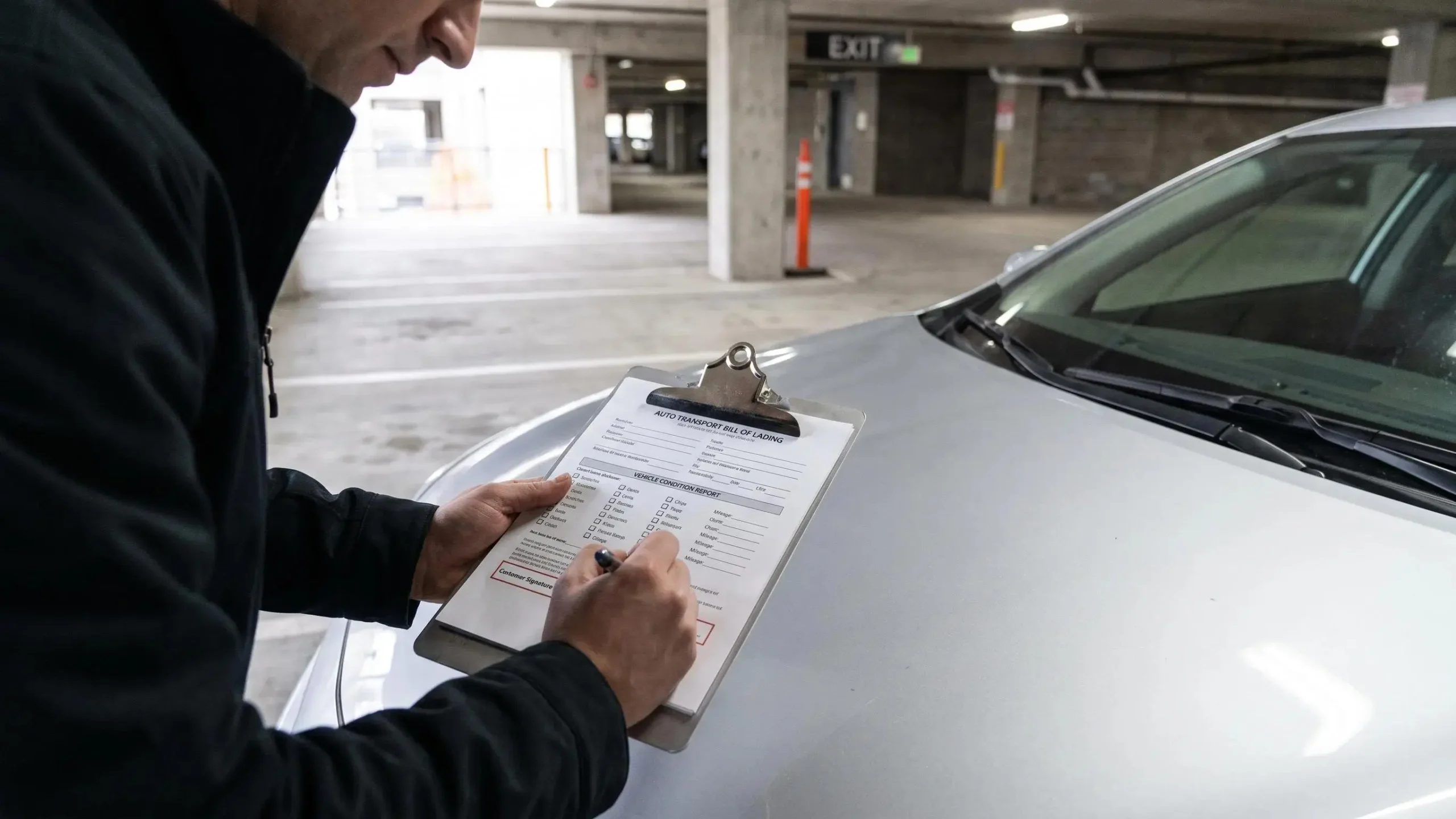
An auto transport bill of lading can look like routine paperwork until delivery reveals a scratch nobody marked. If you are moving a car, motorcycle, or equipment across the country, don’t rush the signature.
What matters is the condition record at pickup and the notes at delivery. We’ve seen small details—mileage, a chipped bumper, a cracked mirror—become the whole conversation later.
Before the truck rolls, make sure you can:
- Match every vehicle detail to what is actually being shipped
- Mark existing damage clearly, not with vague notes
- Keep a signed copy and inspect again before delivery sign-off
What an Auto Transport Bill of Lading Actually Is
The auto transport bill of lading is the main shipping document used when a carrier picks up and delivers your vehicle. If you’re new to transport, it can look like just another form. It isn’t. This is the document that matters most once the truck arrives.
For vehicle owners, it does several jobs at the same time:
- It acts as a contract tied to the shipment
- It works as a pickup receipt
- It becomes the delivery receipt
- It serves as the condition report for car transport
When people ask, “what is a bill of lading,” they’re usually not asking for a legal definition. They’re asking three practical questions:
- Who has the car right now?
- What condition was it in when it changed hands?
- What proof exists if something looks different at delivery?
That’s why this one form carries so much weight.
It also helps to clear up one common mix-up. The auto transport bill of lading is not your title, registration, or proof of ownership. It does not transfer ownership of the vehicle. It records custody and condition during transport. Different issue entirely.
Professional interstate car shipping uses this document as a standard part of the handoff. That alone should tell you something. If you understand this form, a lot of the mystery around car shipping paperwork starts to fall away.
If you only get comfortable with one shipping document, make it this one.
Why the Bill of Lading Matters More Than Most Vehicle Owners Realize
Most vehicle owners focus on car shipping costs, the dates, and whether the truck will show up on time. Fair enough. But the bill of lading car shipping process really turns on documentation, not memory.
At pickup, the bill of lading creates the baseline record of your vehicle’s condition before transport starts. At delivery, that same record is used to compare how the vehicle arrived. If a question comes up, people don’t go back to vague recollections. They go back to what was written down.
That matters most with damage claims. If a scratch, chip, cracked trim piece, or dent wasn’t noted at pickup, things get harder later. Not impossible in every case, but harder. The written inspection record and any attached vehicle inspection form shipping notes become the first place people look.
There’s also a calmer side to this. Good paperwork lowers tension. The shipper, the carrier, and the person receiving the vehicle all have the same written record in front of them. No guessing. No “I thought you said that was already there.”
We believe clear documentation should be part of a fair shipment, right alongside insured door to door service and transparent pricing. They solve different problems. Pricing avoids billing surprises. The bill of lading protects the condition record.
A lot of people treat this form like fine print to rush through while the driver waits. That’s a mistake. Fast signatures cause slow arguments.
Where the Bill of Lading Fits in the Car Shipping Process
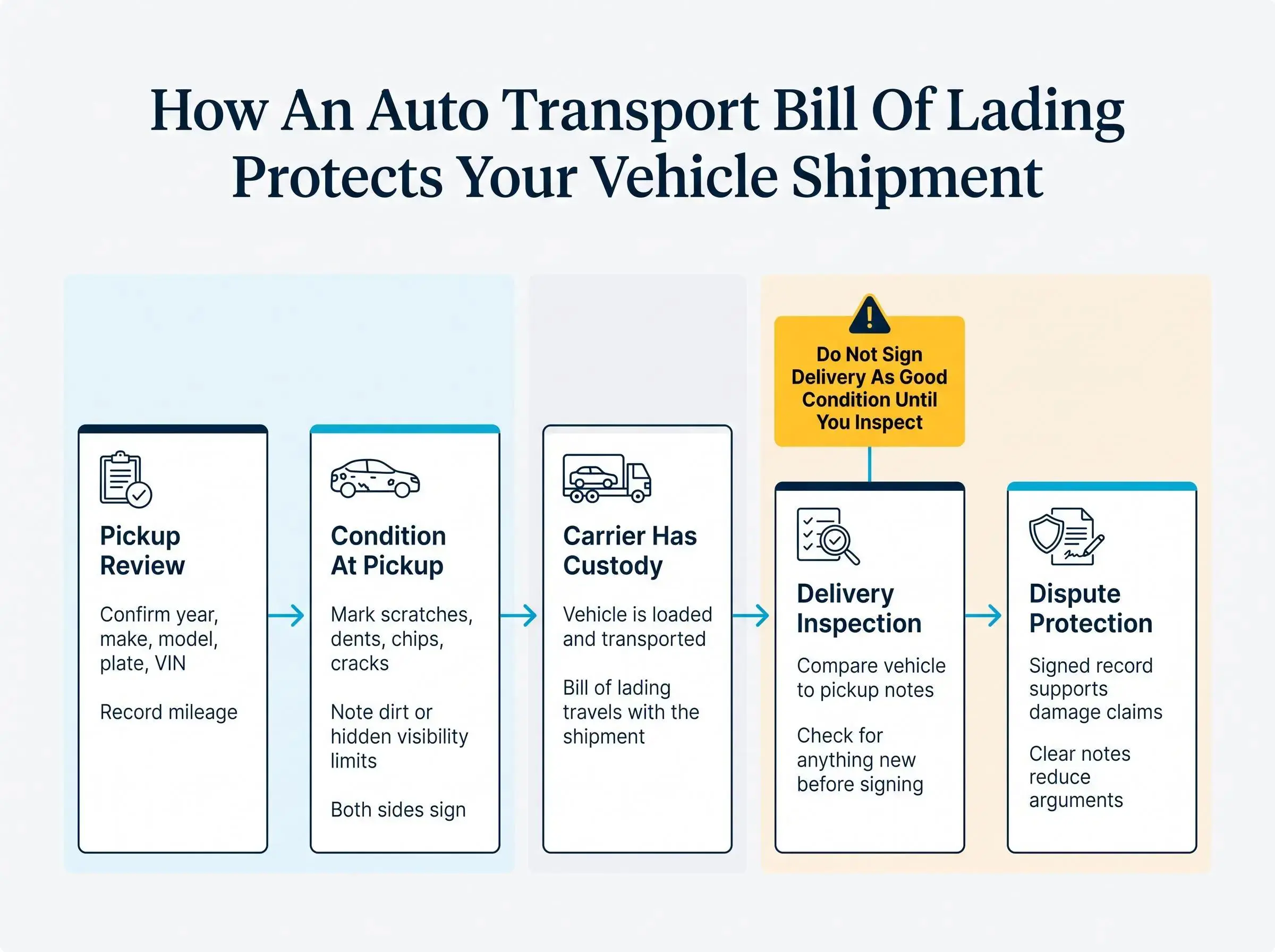
It helps to place this document on the actual timeline, because people often confuse booking paperwork with transport paperwork.
A normal shipment usually moves like this:
Process overview
- Quote
You request a quote
- Scheduling
The shipment is scheduled
- Dispatch details
You receive booking or dispatch details
- Pickup
The carrier arrives for pickup
- Transit
The vehicle is loaded and transported
- Delivery inspection
The vehicle is delivered and inspected again
The auto transport bill of lading usually gets created or finalized at pickup, when the carrier physically takes possession of the vehicle. That’s the moment custody changes. Before that, you’re dealing with quotes, emails, order details, and scheduling confirmations. Useful documents, yes. But they do not replace the bill of lading.
In a broker-managed shipment, we coordinate the transport with licensed carriers. The transporting carrier typically issues the operative bill of lading at pickup because they are the party physically taking the vehicle. That’s normal. It doesn’t mean the earlier paperwork stops mattering. It means those documents serve different purposes.
The form is also usually signed twice:
- Once at pickup
- Again at delivery
That second signature is where a lot of people get careless. We’ll come back to that.
Door to door transport makes the inspection step even more practical. The pickup location and drop-off location affect lighting, space, weather, and how carefully you can walk the vehicle. A cramped curb at dusk is not the same as an open driveway at 10 in the morning. Try not to inspect in a rush if you can avoid it.
What Information Is Usually Included on an Auto Transport Bill of Lading
When the form is handed to you, it helps to know what you’re looking at. A bill of lading car shipping form can vary a bit by carrier, but most include the same core pieces.
You will usually see identifying shipment details such as:
- Bill of lading number
- Order number
- Carrier name and contact information
- Pickup and delivery dates
- Driver information in some cases
Vehicle details are usually straightforward, even if the form looks busy:
- Year, make, and model
- Color
- License plate
- Vehicle identification number or partial VIN
- Sometimes body style or unit number
Mileage is often recorded at pickup and delivery. If the form has a mileage field, don’t leave it blank unless the carrier instructs you otherwise and the reason makes sense. It’s one more way to keep the record tight.
The contact section usually lists the shipper and consignee. In plain language, that’s the person releasing the vehicle and the person receiving it. Names, phone numbers, addresses, and sometimes email addresses belong here. These details matter more than they seem. A wrong phone number on delivery day can create a mess quickly.
Many forms also include payment fields such as total charges, balance due, or payment method. That’s part of the shipment record, but don’t confuse payment lines with condition lines. They’re not doing the same job.
Then there are the remarks and exceptions sections. Pay attention here. This is where existing damage, missing parts, cosmetic issues, or delivery concerns should be written clearly. Some forms also use damage diagrams and abbreviations like scratches, dents, chipped paint, cracked glass, torn material, stains, rust, broken pieces, or missing trim.
If you can’t read the markings, ask. Nobody gets extra credit for pretending they understand the shorthand.
The Vehicle Inspection Form Shipping Step That Protects You the Most
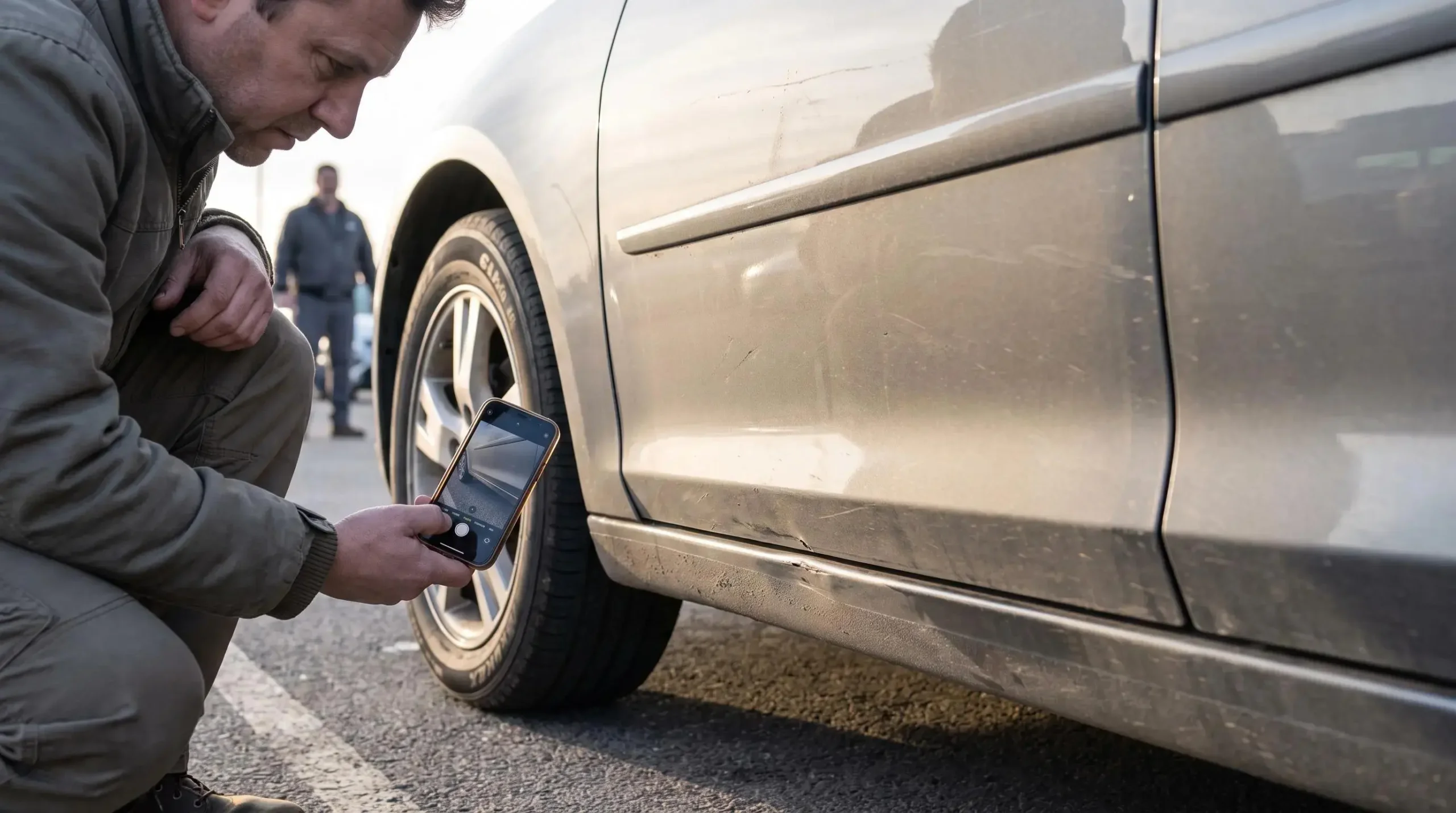
This is the part where owners either protect themselves well or leave gaps they’ll regret later. The condition report for car transport is often built right into the bill of lading, or attached as the inspection section. Either way, treat it like a formal record.
At pickup, you and the driver should inspect the vehicle together and mark visible pre-existing damage. Slow down. A two-minute walk-around can miss the exact kind of issues people argue about later.
Check more than the obvious panels. Look closely at:
- Front and rear bumpers
- Mirrors
- Windshield and glass edges
- Wheels and rims
- Lower rocker panels
- Roofline if visible
- Spoilers, trim, and plastic pieces that crack easily
Good lighting helps a lot. So does stepping back, then getting close again. Small chips disappear in poor light, and lower-panel scrapes are easy to miss if you’re only looking straight ahead. If the vehicle is dirty, say so and make sure that note appears in remarks. Dirt hides condition. That’s just reality.
Some inspections also note visible interior issues and mileage. If something is already torn, stained, or broken and it’s in sight, get it written down.
Photos matter too. Take clear, time-stamped photos before pickup and again at delivery. Get wide shots and close-ups. But don’t make the mistake of thinking photos replace the written record. They support it. The bill of lading is still the shared document both sides acknowledge.
Photos help your memory. The bill of lading helps your position.
Pickup Versus Delivery: Why the Bill of Lading Gets Signed Twice
The two signatures are the whole structure. Miss that, and you miss how the system works.
At pickup, the vehicle is inspected, visible condition is noted, and custody transfers to the carrier. Your signature confirms the starting record. The driver’s signature does too. That signed pickup version becomes the benchmark for the rest of the shipment.
At delivery, the vehicle is inspected again and compared against the pickup record. That’s where you check for anything new. The second signature is not just closing out paperwork. It’s the moment delivery condition gets documented.
If you notice new damage, write it on the bill of lading before the truck leaves. Not later that evening. Not the next morning after a better look. Before the carrier departs.
That timing matters because most bill of lading car shipping disputes start with the same problem: the vehicle was signed for, then concerns were raised afterward with no notation on the delivery record.
If you can’t be present, appoint a trusted agent. Give that person a simple job: inspect carefully, compare the car to the pickup notes, and do not sign off blindly. This applies whether you’re using open transport or enclosed transport. The trailer type changes exposure. It doesn’t erase the need for inspection.
Red Flags and Common Mistakes That Can Hurt Your Position
A lot of trouble starts with rushed signatures and vague notes. Nobody plans to be careless. It still happens every day.
Watch for these mistakes:
- Signing too quickly without reading pickup or delivery notes
- Accepting vague terms like “minor wear” instead of specific damage descriptions
- Failing to note mileage or basic identifiers
- Trusting verbal assurances that never make it onto the written record
- Assuming small chips, trim cracks, or bent brackets are too minor to list
One caution matters more than the rest: do not sign language that says the vehicle was received in good condition before you’ve actually inspected it. If the delivery section says you’ve accepted the car in good condition and you haven’t done a proper check, stop and read it again.
Tiny issues count. A chipped edge on a wheel, a cracked mirror cap, a gouge in the lower bumper, a missing trim piece. Those are exactly the kinds of details people think are “obvious” until nobody wrote them down.
Also, don’t assume personal items are covered the same way as the vehicle itself. Carrier rules on personal belongings vary. If you’re leaving items in the car, verify those terms ahead of time. The bill of lading may not protect those contents the way you expect.
Paper beats conversation. Every time.
Paper Versus Digital Bills of Lading
Both formats are common now. Some carriers still use printed forms on a clipboard. Others use a phone or tablet and send copies electronically.
The format isn’t the real issue. Accuracy is.
Whether the bill of lading is paper or digital, do the same things:
- Review every line
- Confirm the damage markings and remarks
- Make sure signatures are completed
- Keep your copy
- Save your photos with the shipment records
A phone signature or emailed copy can still be part of the shipping record. That’s normal in current operations. What matters is whether the pickup and delivery versions are complete and preserved.
Ask for your copy right after pickup and again after delivery. Don’t wait and assume it will sort itself out. Digital paperwork is convenient, but convenience has a bad habit of making people less careful.
What to Do If You Notice Damage at Delivery
Stay calm and get methodical. This is not the moment to rely on memory or start arguing first.
Use this sequence:
If damage appears
- Inspect before signing
Inspect the vehicle before signing the final delivery section
- Check pickup notes
Compare it to the pickup condition notes
- Note damage on BOL
Write any new damage directly on the bill of lading immediately
- Take photos
Take clear photos from several angles
- Keep records
Keep copies of the delivery paperwork and related messages
The delivery record will be one of the first documents reviewed if a damage claim is filed. That’s why waiting a few days to mention a problem puts you in a weaker spot. The later the issue appears, the more avoidable questions come with it.
Careful documentation doesn’t guarantee an easy process every time. It does give you something far stronger than “we’re pretty sure it wasn’t there before.”
How the Bill of Lading Relates to Other Car Shipping Paperwork
The auto transport bill of lading is the most important document in the shipment, but it isn’t the only one. It sits in the middle of a bigger paperwork chain.
You’ll usually have other records such as:
- Quote details
- Order confirmation
- Dispatch or scheduling notices
- Carrier insurance information
- Payment terms or balance details
Each one has a job. The quote tells you pricing. The order confirmation reflects what was booked. Dispatch details help with timing. Insurance information addresses coverage. Payment terms explain when money changes hands.
The bill of lading handles something different: condition, custody, and delivery status.
With our nationwide open and enclosed auto transport service, customers still need to review the carrier’s pickup and delivery documents carefully because that’s where the condition is formally recorded. We also make a point of keeping pricing transparent and not requiring upfront payment until pickup, which helps reduce confusion in the booking process. But clean billing does not replace clean inspection paperwork. Different protection, different purpose.
Once you see how the documents fit together, the bill of lading stops feeling mysterious. It’s simply the condition and handoff record inside the larger shipment file.
Questions to Ask Before You Sign
By the time the form is in front of you, you don’t need a speech. You need a short, useful check.
Run through these questions:
- Is the vehicle information correct, including make, model, color, plate, and VIN details?
- Has mileage been recorded if the form includes that field?
- Are all visible scratches, dents, chips, cracks, and missing items clearly marked?
- Do the pickup and delivery contact details match the actual people involved?
- Do you understand any symbols, abbreviations, or diagram marks?
- Have you received, or at least requested, your copy of the form?
- Are there any terms about inspection, delivery acceptance, or cargo coverage that need clarification?
- If someone else will receive the vehicle, do they know to repeat this same check at delivery?
If one answer is shaky, pause. A thirty-second review before signing is easier than a three-day paperwork argument after the truck is gone.
Conclusion
The auto transport bill of lading is the single most important document in your shipment because it records condition, custody, and delivery status in one place. That’s its job, and it does it well when people actually treat it seriously.
Don’t look at it as a routine signature step. Use it as a protection tool. Read it, inspect carefully, make sure the notes match the vehicle, and keep your copy.
If you’re getting ready to ship, review the pickup process before the carrier arrives, know what you want to inspect, and work with a transport partner that values clear documentation, insured door to door service, and straightforward communication. The truck still has to move the vehicle. The paperwork has to protect you.