
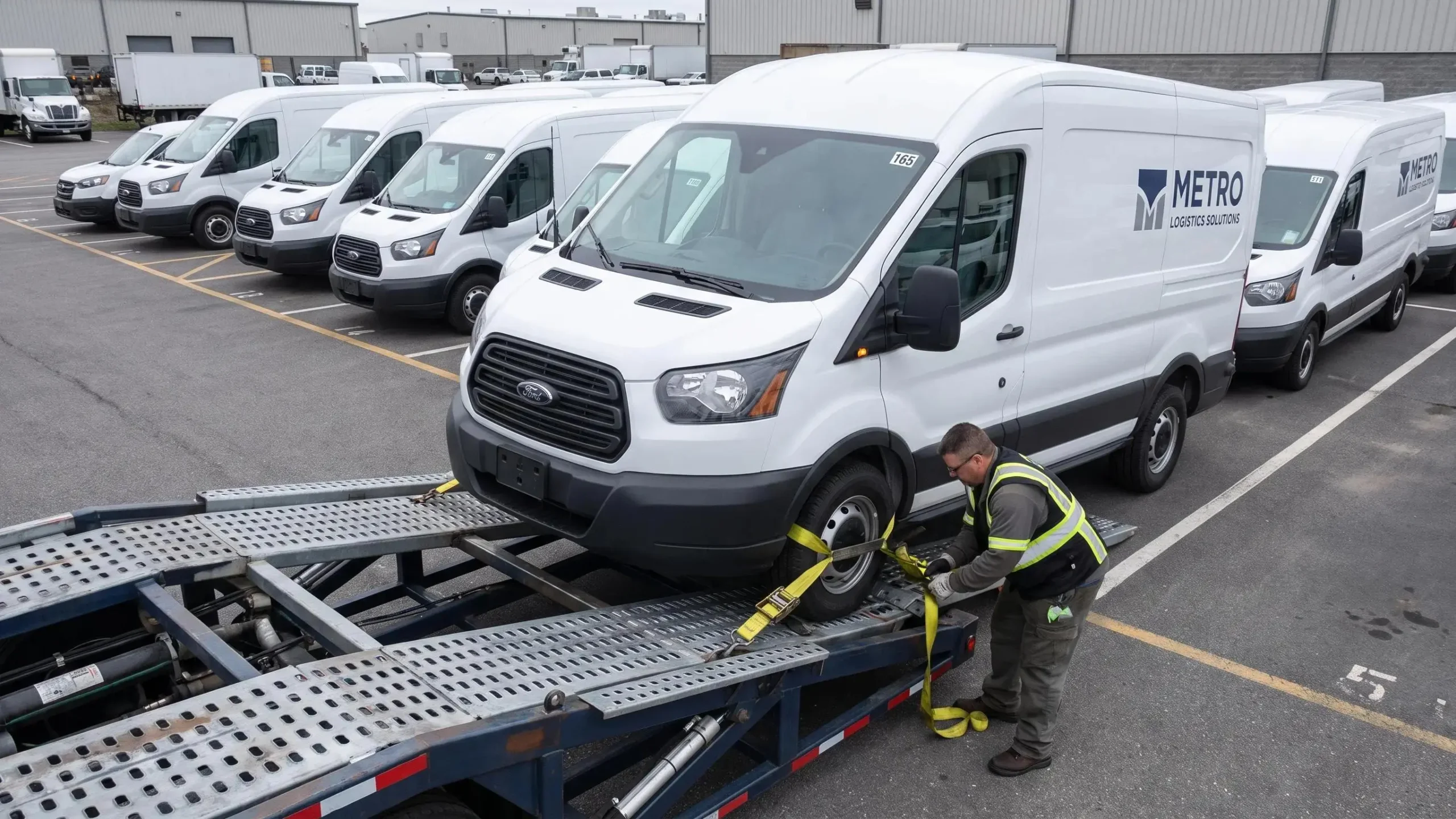
Moving several vehicles is where “just drive them over” starts burning payroll, miles, and launch dates. Fleet auto transport works when every unit has a release plan, an accessible pickup point, and someone ready to sign.
This is a working guide for businesses relocating vehicles across the U.S. What matters: accurate VIN lists, realistic windows, site access, and clean handoffs.
Start with these pressure points:
- Flag inoperable units before pricing.
- Check carrier access at every site.
- Assign one receiver per location. Keep vehicles working, not waiting.
What Fleet Auto Transport Actually Means
Fleet auto transport is the organized movement of multiple business vehicles under one plan. That sounds simple, but it changes the job completely.
A single consumer shipment is usually one car, one pickup point, one delivery point. Fleet auto transport often means several vehicles, tighter timing, different destinations, and people on both ends who need the handoff to happen without derailing the workday. The transport itself matters, but so do pickup order, delivery sequence, and keeping your operation moving while the vehicles are in transit.
In practice, that can mean:
- five company sedans moving during an office relocation
- a batch of cargo vans heading to new branch locations
- recurring corporate fleet vehicle transport on the same lanes every month
- a multi vehicle transport service with staggered drop-offs across a region
This is where terms like commercial vehicle logistics, business vehicle relocation, and company car shipping start to overlap. They all point to the same basic need: move multiple units without turning it into a scheduling mess.
The main shift is mental. You’re not buying a ride for a vehicle. You’re building a process your business can repeat.
Good fleet shipping is less about horsepower and more about coordination.
Which Businesses Benefit Most From Fleet Transport
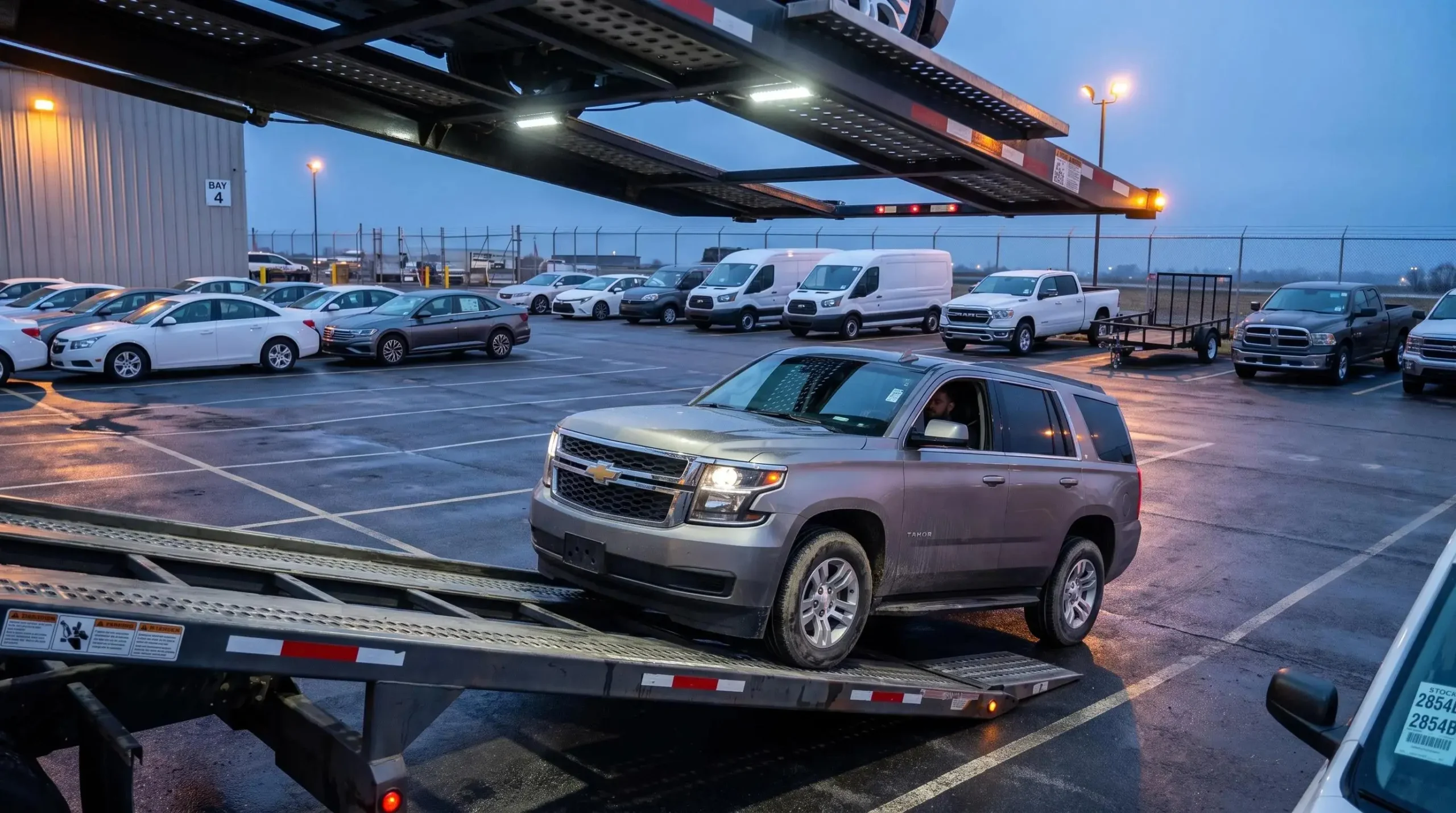
Fleet shipping isn’t only for huge national operations. We see the need show up anywhere a business has more vehicles than one person can reasonably manage by hand.
Some of the most common fits include:
- corporate fleets moving employee or pool vehicles
- rental groups rebalancing units between branches
- leasing companies shifting returns or new placements
- dealerships moving inventory between stores or to resale channels
- government agencies relocating units between departments or sites
- utility companies moving service trucks and support vehicles
- construction firms shipping pickups, trailers, or selected equipment
- delivery operators and ride-share related fleets repositioning vehicles
The reasons are usually practical, not dramatic. A branch runs short on SUVs. A new office opens. Units need to get to auction. A team in another state needs vehicles before Monday morning, not sometime next week.
And the vehicle mix is rarely neat. One move might include sedans, executive SUVs, half-ton pickups, cargo vans, and a trailer. In some cases, there may also be heavier units that need separate planning. That’s normal.
The common thread isn’t the industry. It’s the need for timing, visibility, and cost control across several units at once. When those three things get loose, the move starts to feel expensive even before the invoice shows up.
Why Businesses Use Fleet Auto Transport Instead of Driving Vehicles Themselves
A lot of businesses first ask the obvious question: why not just have staff drive them?
On paper, it can look cheaper. In real life, it often isn’t.
Once you start spreading vehicles across long distances, the hidden costs pile up fast:
- employee or contractor time disappears into the road
- mileage and wear hit the vehicle before it even reaches the new site
- fuel, hotels, meals, and reimbursements add up
- separate drivers create separate schedules
- one delay turns into three phone calls and two new problems
That last part is what people tend to miss. Driving vehicles one by one creates scattered responsibility. No single plan. No single chain of communication. Just a series of moving pieces that need attention at the exact moment your team is already busy.
Structured fleet auto transport turns that into a business decision instead of a scramble. Your sales team keeps selling. Your service group stays on service calls. Your managers aren’t trying to figure out who got stuck outside Albuquerque at 8:40 p.m.
There is also the emotional side, and it’s real. When multiple units need to move, uncertainty wears people down. A clear transport plan takes that pressure off the internal team.
The Most Common Business Use Cases for Fleet Shipping
Business vehicle relocation usually ties back to readiness. A vehicle that’s in the wrong place at the wrong time isn’t just idle. It’s in the way.
Here are the use cases we see most often, and what actually matters in each one.
Seasonal rebalancing
Rental, field service, and regional operations often need to move vehicles where demand shifts. Speed matters here, but so does flexibility. These jobs can tighten quickly if the weather changes or a local market gets busy faster than expected.
Corporate moves and territory changes
When teams relocate or coverage areas change, company car shipping has to line up with employee start dates and site access. Clean delivery windows matter more than vague promises.
New branch openings
This one sounds straightforward until three carriers arrive at once and the new lot isn’t ready. Branch launches need delivery order, receiving contacts, and a little breathing room around the date.
Auction and resale cycling
Once vehicles are heading to auction or remarketing channels, documentation starts doing the heavy lifting. The cleaner the records, the fewer questions later.
New acquisition rollout
If a business acquires units and needs them distributed to several operating locations, staggered scheduling usually works better than forcing everything into one drop. A rollout is not a parade. It needs structure.
Repair, refurbishment, and upfit work
Some vehicles need to go to a facility that isn’t near the branch using them. In these cases, timing matters, but so does vehicle condition info. Inoperable or modified units change the plan.
Event or temporary deployment support
Trade events, temporary projects, and short-term field deployments often have hard dates and little tolerance for drift. If timing is rigid, the planning needs to be honest from day one.
Most fleet moves are not really about transport. They’re about avoiding downtime.
How Fleet Auto Transport Works From Planning to Delivery
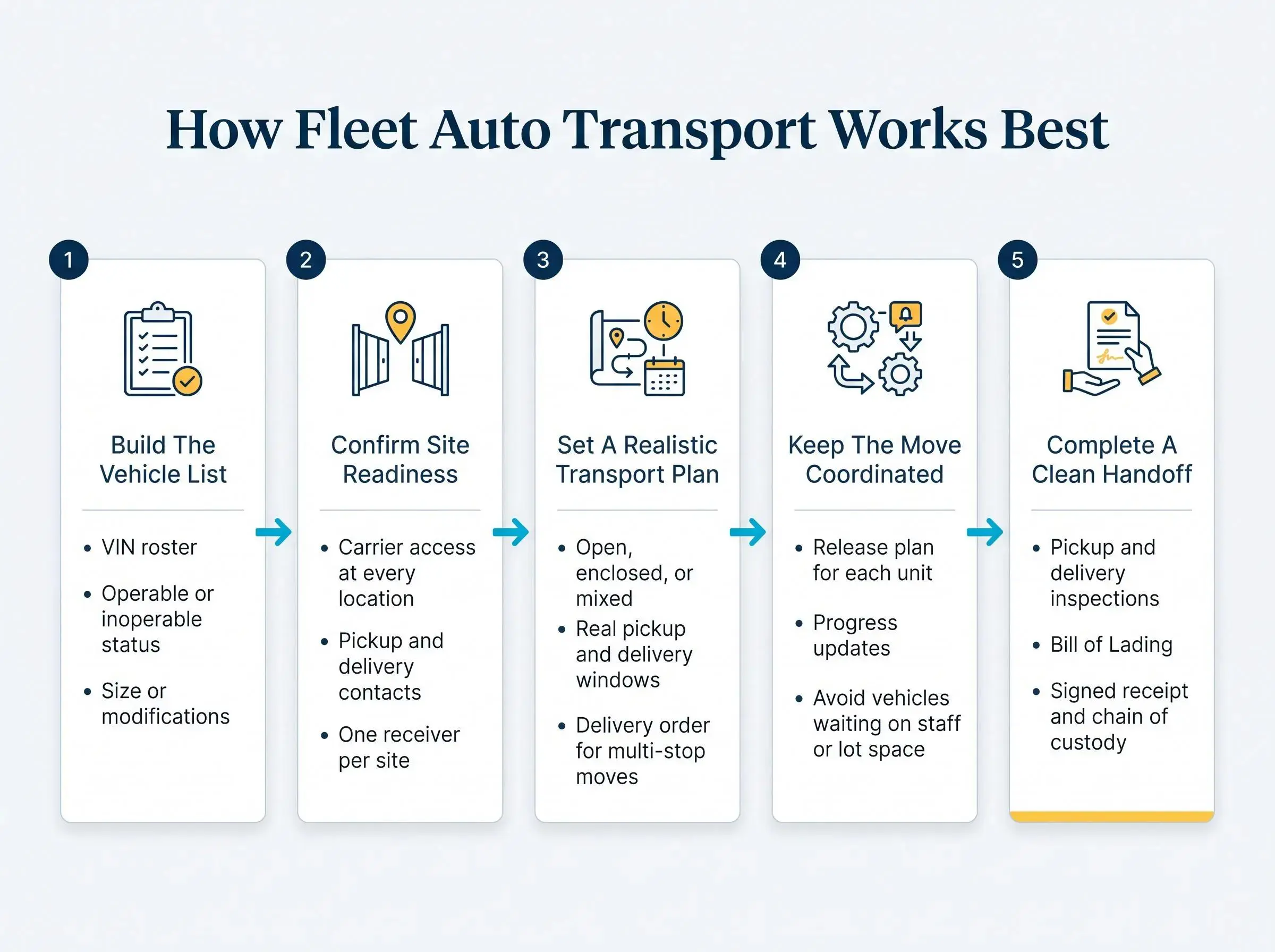
The cleanest fleet moves start with better intake. Not more paperwork. Better paperwork.
At the front end, you want the basics locked down:
- Final vehicle list with VINs
- Operable or inoperable status
- Vehicle dimensions if anything is oversized or modified
- Origin and destination points
- Preferred timing and any hard deadlines
From there, the shipment gets shaped around the actual job. Is it one batch? A recurring lane? A multi-stop rollout with several delivery points? Those are different moves, even if the same number of vehicles is involved.
Next comes trailer type. Open transport is common for standard fleet units. Enclosed transport makes more sense when the vehicle value, privacy needs, or exposure concerns are higher.
Then the real-world details kick in. Pickup and delivery windows need to match site hours, staffing, and truck access. On larger moves, multiple carriers may be involved, and staggered arrivals can keep a lot from turning into gridlock by the second afternoon.
Each unit should be inspected at pickup and again at delivery, with the Bill of Lading serving as the core handoff record. Progress updates and release-to-receipt communication matter more when several locations are involved.
Businesses that want less internal coordination usually prefer insured door-to-door service through a broker-managed setup like our Nationwide Open and Enclosed Auto Transport. It keeps the move under one roof instead of forcing your team to chase separate arrangements.
Open vs Enclosed Fleet Shipping for Business Vehicles
Most business fleets don’t need a fancy answer here. They need the right one.
Open transport is the standard choice for many fleet moves because it is practical and budget-conscious. If you’re moving routine sedans, SUVs, pickups, or cargo vans, open shipping is usually the first place to look. It handles everyday corporate fleet vehicle transport well.
Enclosed transport is different. It’s used when shielding the vehicle from weather and road debris matters enough to justify the extra cost. That often applies to executive vehicles, luxury units, specialty builds, confidential test vehicles, or other high-value company assets.
A quick way to think about it:
- Open transport: standard business vehicles, routine lanes, tighter budgets
- Enclosed transport: higher-value units, specialty vehicles, or moves where extra protection is worth paying for
You also don’t have to force one answer across the whole fleet. Mixed moves are common. Standard units can go open while a few executive or specialty vehicles go enclosed under the same broader relocation plan.
We handle both through our nationwide open and enclosed auto transport service, which helps when a business has mixed priorities and doesn’t want to split the job into separate systems.
The tradeoff is simple. Open usually gives you lower cost and broader availability. Enclosed gives you more protection, but it can narrow scheduling options and raise the price.
What Affects Fleet Auto Transport Pricing
Pricing gets sloppy when people oversimplify it. “How much per car?” is rarely the right first question.
The actual variables include:
- number of vehicles
- total distance
- how active the route is
- open or enclosed carrier type
- operable or inoperable condition
- pickup and delivery access
- multi-stop routing
- season and lane demand
- urgency and lead time
A larger move can sometimes improve the per-vehicle number because capacity can be planned more efficiently. The same goes for recurring lanes. If you’re shipping the same route repeatedly, the process tends to tighten up. That usually helps with both planning and cost stability.
The pricing problems businesses dislike most are often preventable:
- rush dispatch premiums because the move waited too long
- extra effort at restricted-access sites
- schedule changes that were never clearly communicated
- fragmented shipments that should have been planned together
This is where transparent pricing matters. We keep quoting straightforward, and we don’t require upfront payment until pickup. For company car shipping, that takes some pressure off. Businesses don’t like wiring money into uncertainty, and they shouldn’t have to.
Capacity, Timing, and Scheduling Matter More Than Most Businesses Expect
Getting a quote is the easy part. Matching real carrier space to your actual timing is where the job either settles down or gets expensive.
There’s a big difference between a flexible pickup window and a fixed launch date. If your vehicles need to arrive for an auction, branch opening, or seasonal demand surge, the transport plan has to reflect that early. Hard deadlines shrink your options.
A few things change the picture fast:
- peak seasons tighten capacity on busy lanes
- urgent relocations cost more because route building time disappears
- multi-location pickups and deliveries need sequencing, not guesswork
Businesses often talk in single dates. Transport works better when you think in windows and delivery plans. That doesn’t mean vague. It means realistic.
One experienced rule we trust: if three sites are involved, assume the order matters. Because it does. Access hours, lot space, staffing, and receiving readiness all start to affect one another.
Predictable scheduling is what keeps commercial vehicle logistics from turning into expensive scrambling.
Traffic is one reason delivery windows need slack. In ATRI’s 2025 truck-GPS bottleneck analysis, the five highest-ranked locations averaged just 19.1 to 34.9 mph during peak conditions, compared with 30.3 to 44.9 mph outside peak periods.
For a move that must pass through one of these interchanges, build the receiving plan around a delivery window rather than a single promised arrival time. These are location-level averages, not a forecast for any individual fleet shipment; the actual impact depends on the route, time of day, weather, loading time, and site access.
Documentation, Insurance, and Chain of Custody for Business Fleets
Documentation gets treated like admin work until something doesn’t line up. Then it becomes the whole story.
For fleet moves, the basics need to be tight:
- accurate VIN and vehicle roster
- pickup inspection
- delivery inspection
- Bill of Lading for each handoff
- photos when condition verification needs extra support
When several similar vehicles are moving together, mix-ups are easier than people expect. Tracking each unit from release to receipt cuts down on confusion, especially when more than one origin or destination is involved.
Insurance should also be plain, not mysterious. Carrier coverage needs to be in place, and business shippers should understand that condition reporting at pickup and delivery is central if questions come up later. The paperwork is not a formality. It’s your accountability trail.
We state that carrier insurance coverage is included, which is exactly the kind of baseline businesses want to see before committing to a multi vehicle transport service. It doesn’t remove the need for clear inspections, but it does remove one layer of doubt.
The Most Common Fleet Shipping Problems and How to Avoid Them
Most fleet transport failures don’t come from the idea of shipping. They come from missing details early.
The usual trouble spots are familiar:
- unclear pricing
- delayed pickups
- weak communication
- site access issues
- delivery bottlenecks
- last-minute changes
- confusion over who signs at each end
The fixes are not glamorous, but they work.
Provide complete vehicle and site details early. Build pickup windows that reflect reality. Consolidate routes when it makes sense. Confirm who releases and who receives each unit. If timing is flexible, don’t wait for peak demand periods to make the call. Keep the paperwork consistent across all vehicles.
Commercial sites need special attention. Secure campuses, branch lots, warehouses, and operating yards may need advance approval for truck access. Sometimes true door-to-door is possible. Sometimes a nearby safe meeting point is the better plan. It’s better to know that Tuesday than discover it Friday morning.
Most problems show up before the truck does.
How to Choose the Right Fleet Transport Partner
A good decision framework beats a flashy pitch every time.
When you’re evaluating a fleet transport partner, ask direct questions:
- Do they handle nationwide shipments?
- Can they coordinate both open and enclosed moves?
- How do they manage pickup and delivery communication?
- What details do they need for an accurate quote?
- Is pricing explained clearly?
- When does payment actually happen?
- How is insurance handled?
It also helps to understand the broker-managed side of transport. Managing carriers independently can work, but it puts more coordination on your team. A broker-supported approach can match your shipment with licensed carriers and simplify multi-unit planning, especially when the move involves mixed vehicle types, several stops, or broader scheduling demands.
That’s how we operate at NexRoute Transportation. We support nationwide transport, door-to-door coordination, transparent pricing, and no upfront payment until pickup. For a business, those are useful process answers, not marketing lines.
Choose clarity over promises. Every time.
A Simple Pre-Shipment Checklist for Business Vehicle Relocation
If you want the move to feel manageable, start here. This checklist catches the issues that usually create delays later.
Before pickup, confirm:
- final vehicle roster and VIN list
- operable or inoperable status for each unit
- pickup and delivery contacts
- site hours and access instructions
- keys are available
- fuel levels meet transport requirements
- loose-item policy is clear
- internal approvals or release paperwork are ready
- preferred delivery order is noted if several sites are involved
Then handle the operational side:
- notify branch managers or receiving teams
- confirm who will inspect and sign
- leave buffer time around the highest-priority deliveries
This prep does two things at once. It reduces quote revisions, and it cuts down day-of-pickup surprises. Businesses usually don’t need more complexity. They need fewer avoidable mistakes.
When a Business Should Use Open, Enclosed, or Mixed Fleet Transport
This choice gets easier when you stop treating the whole fleet like one category.
Use open transport when you’re moving routine company cars between offices, relocating standard service vehicles, or shipping everyday fleet units on budget-sensitive timelines. For most normal company car shipping, open is the practical answer.
Use enclosed transport when the units are executive vehicles, luxury models, specialty builds, or other higher-value assets where extra protection matters enough to change the budget.
Use a mixed strategy when the fleet itself has different priorities. That might mean:
- standard sedans and pickups shipped open
- executive or specialty vehicles shipped enclosed
- passenger vehicles moved alongside trailers or equipment under one broader relocation plan
If your move includes more than passenger vehicles, confirm scope early. Trailers, RVs, boats, or heavy equipment can be part of a wider business relocation, but equipment needs and carrier setup may differ. We handle those broader transport categories too, and that matters when one move starts spilling outside the usual car list.
Conclusion
Fleet auto transport gets easier when you treat it like an operating process, not a last-minute rescue job. Clear planning, realistic scheduling, accurate documentation, and the right trailer type do most of the heavy lifting.
Company car shipping and commercial vehicle logistics don’t have to feel like a gamble. When pricing is explained plainly, insurance is in place, and handoffs are documented, the move becomes easier to manage and easier to trust.
If you’re planning business vehicle relocation, start with the vehicle list, route details, and timing needs. Once those are clear, you can request a quote and evaluate the move like any other business decision: by process, cost, and how reliably it gets done.