
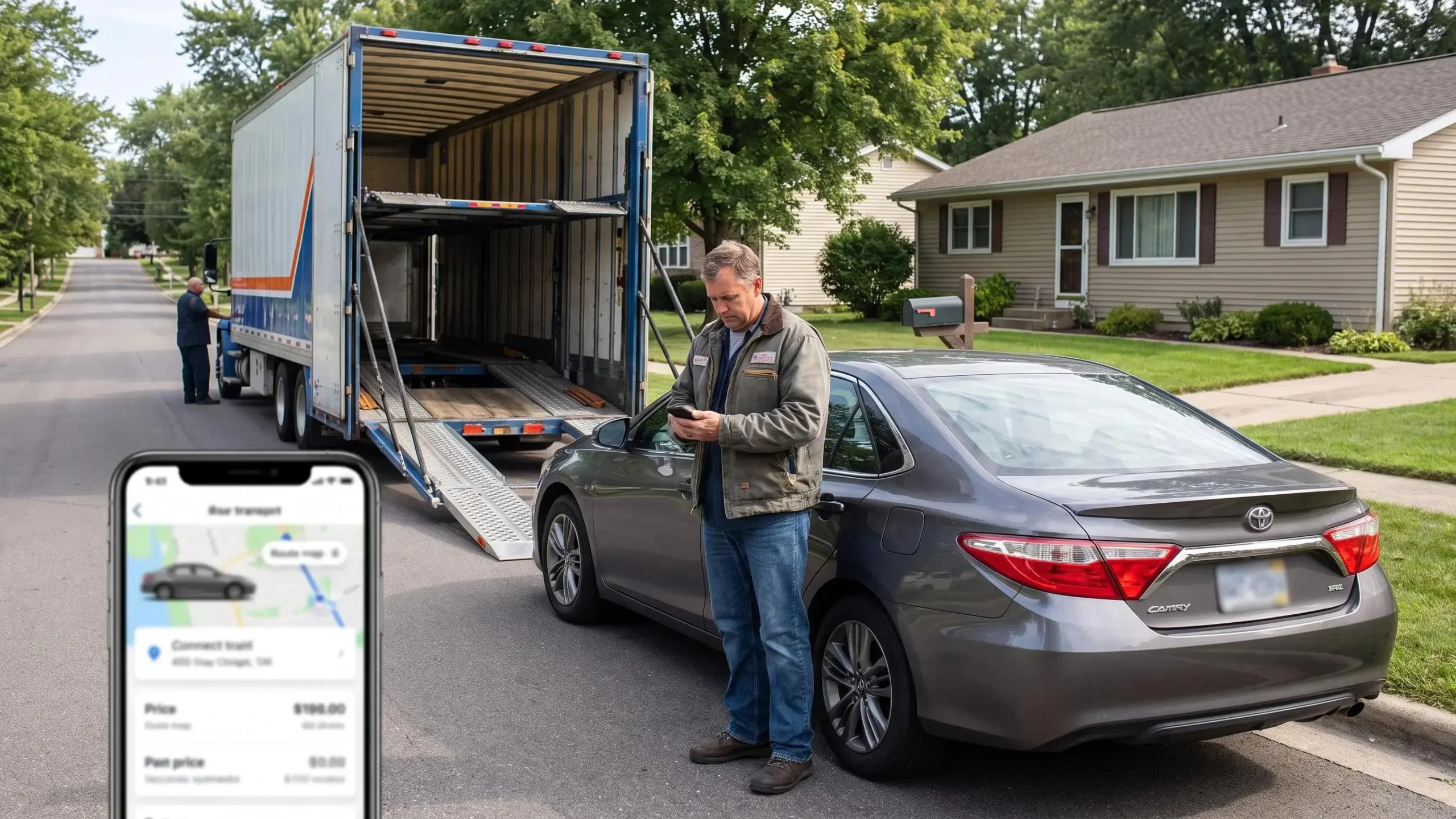
If you’re asking how much does it cost to ship a car, the hard part is not getting quotes. It is figuring out why one says $900 and another says $1,500 for the same move.
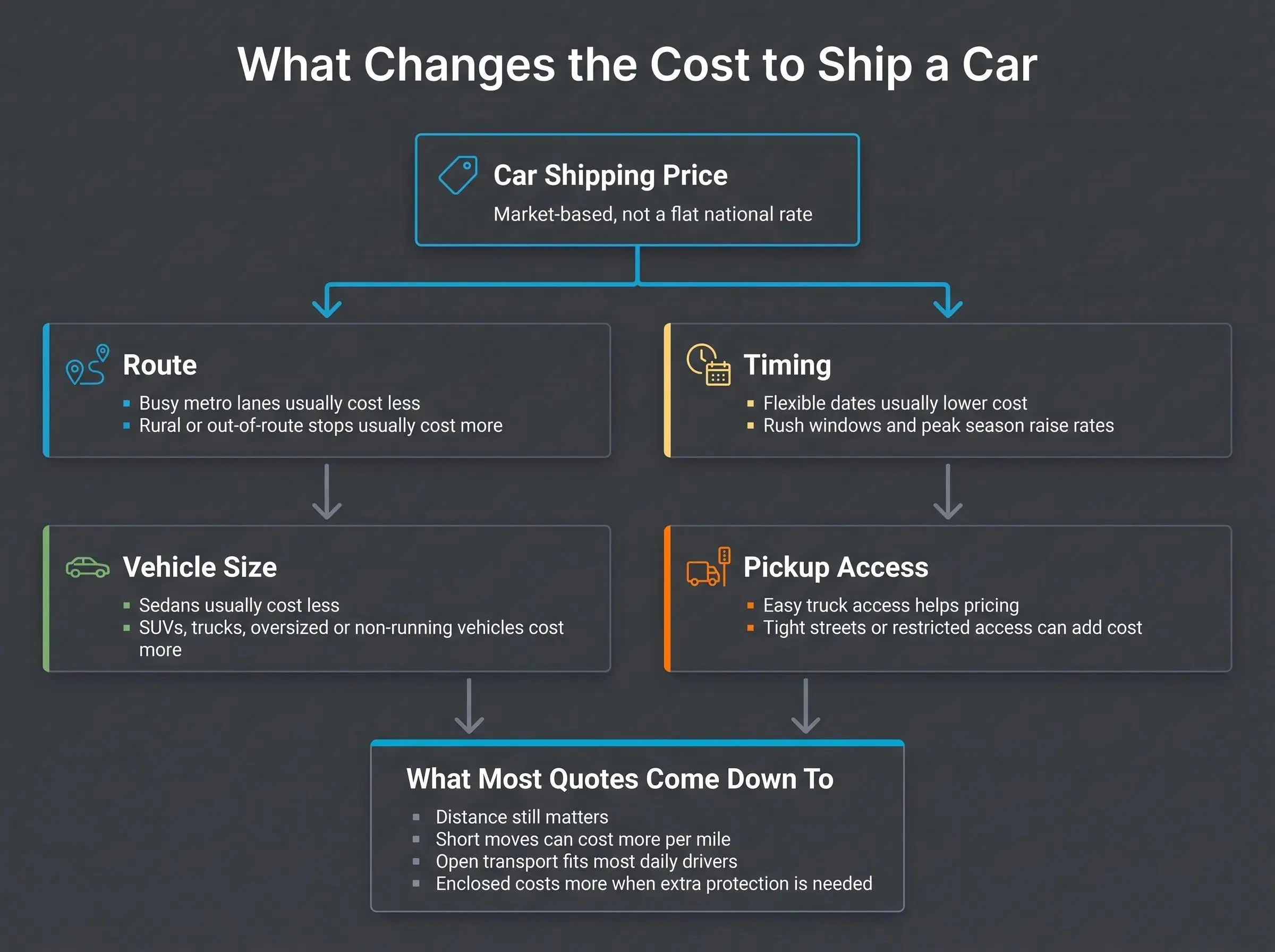
What changes the price is usually pretty simple: route, timing, vehicle size, and pickup access. We do not guess at that. Start here:
- A 300-mile move can look expensive per mile because the truck still has the same loading and dispatch work.
- Open transport fits most daily drivers; enclosed usually makes sense when the vehicle justifies the higher rate.
- The cheapest quote often breaks when the dates are tight or the truck cannot safely reach your address.
The Short Answer on Nationwide Car Shipping Costs
If you’re trying to pin down how much does it cost to ship a car, start with a range, not a single number. For most standard vehicles on an open carrier, nationwide pricing commonly falls somewhere between about $600 and $2,000. Enclosed transport usually lands higher.
For a coast-to-coast move on a common route, a standard sedan on an open trailer often falls around $1,300 to $1,900. Enclosed shipping for that same kind of trip can often run $2,000 to $3,000, depending on the lane and the vehicle. For a typical 1,000-mile shipment, many market estimates cluster around $1,000 to $1,100, but that’s a reference point, not a rule.
That difference is where people get uneasy. They expect a flat national rate, and auto transport doesn’t work that way.
Car shipping is priced like a live market, not a postage stamp.
The good news is that pricing isn’t random. It usually comes down to a handful of things you can actually understand: distance, route demand, vehicle size, open versus enclosed transport, timing, and how easy the pickup and delivery locations are to reach.
Why Car Shipping Quotes Vary So Much
If you’ve already requested a few quotes, you’ve probably seen the spread. One company says one number, another is hundreds lower, and a third is high enough to make you stop reading. That’s normal in this industry. It’s also why people don’t trust it at first.
Two quotes for the same route can differ because the companies are not pricing the same thing, even when it looks that way. One may be assuming a wider pickup window. Another may be pricing enclosed instead of open. One may be giving you a number that matches current carrier demand, while another is giving you a teaser rate that sounds good until it’s time to actually move the car.
Vehicle shipping prices are market-based. They’re not fixed like parcel shipping, where a box goes from point A to point B on a standard network. Carriers are selling space on a trailer, on a route, on specific days, with real limits on weight, timing, and load planning.
A cheap quote can be real. It can also be wishful thinking.
Once you understand that carriers are pricing mileage, trailer space, timing, and convenience, the pattern gets clearer. You’re not looking at random numbers. You’re looking at different assumptions.
A U.S. News comparison illustrates how far published open-carrier prices can spread even for one standardized vehicle. The two columns represent separate route-distance scenarios, not identical trips: 500 miles from Pittsburgh to Boston and 2,500 miles from Buffalo to Seattle.
| Provider | Pittsburgh to Boston (500 miles) | Buffalo to Seattle (2,500 miles) |
|---|---|---|
| AmeriFreight | $643 | $1,297 |
| Mercury Auto Transport | $643 | $1,213 |
| Easy Auto Ship | $912 | $1,694 |
| ShipYourCarNow | $519 | $1,687 |
| SGT Auto Transport | $632 | $1,452 |
| RoadRunner Auto Transport | $645 | $1,435 |
For the 500-mile scenario, the listed prices span $393, from $519 to $912. For the 2,500-mile scenario, they span $481, from $1,213 to $1,694. These are published provider prices for a 2018 Ford Taurus collected in July 2025, rather than guaranteed quotes; the origin, destination, and route direction differ between the two scenarios, so use them to gauge quote dispersion—not to calculate a universal per-mile rate.
That is why it helps to compare offers only after confirming the same vehicle condition, transport type, pickup window, and access assumptions.
The Biggest Factors That Determine How Much It Costs to Ship a Vehicle
There are a lot of little variables in transport, but the big price drivers are pretty consistent. If you’re asking how much does it cost to ship a vehicle, these are the ones that move the number.
Distance
Distance is the biggest factor in total price. More miles usually means more total cost.
But longer trips often cost less per mile than shorter ones. That catches people off guard. A 300-mile move can feel expensive for the distance because the carrier still has to schedule it, load it, inspect it, and make room on the trailer.
Route popularity
Busy lanes between major metro areas usually price better than routes that pull a carrier out of the way. Think large cities connected by interstate corridors. Those are easier to cover efficiently.
Rural pickups and deliveries usually cost more. Not because anyone is trying to be difficult, but because the truck may have to leave its most efficient route and spend extra time getting in and back out.
Vehicle size and weight
Sedans usually cost less than full-size SUVs, trucks, vans, or oversized vehicles. Bigger vehicles take more trailer space and add more weight, which affects fuel and load balance.
Lifted trucks, oversized tires, and modified vehicles can raise the quote too. A car doesn’t just need to fit on paper. It has to fit safely on the trailer.
Vehicle condition
Non-running vehicles usually cost more because they may need a winch and extra handling. A common rule of thumb is an added $100 to $200 for inoperable units.
That’s one of those details that needs to be accurate upfront. If a car is listed as running and it’s not, the price issue shows up at pickup, which is the worst time for it.
Timing and urgency
Flexible pickup windows usually help lower the rate. If you need same-day service, a tight date, or a rush pickup, expect the price to go up.
The market charges for urgency. It always has.
Season
Summer relocation demand, snowbird traffic, holidays, and weather all affect rates. Some seasonal corridors can carry premiums of 20 to 40 percent when demand spikes.
A Florida route in peak snowbird season is not the same market as that same route in a quieter month.
Pickup and delivery accessibility
Door-to-door service is the standard people want, but not every address can safely handle a large car carrier. Tight streets, low branches, steep turns, apartment lots, HOA restrictions, or rural access can change the plan.
Sometimes “door-to-door” still means meeting the carrier nearby in a safe, accessible spot. That’s not a red flag. That’s normal trucking reality.
How Distance Changes the Price Per Mile
This is one of the most useful ideas in the whole process. The total price rises with distance, but the price per mile usually falls as the trip gets longer.
Here’s the rough pattern:
- Very short shipments can exceed $2 per mile
- Around 1,000 miles, a typical vehicle may land near $1 per mile
- Long-haul coast-to-coast routes on busy lanes can drop to roughly $0.45 to $0.65 per mile
That happens because the fixed work doesn’t shrink much on a short move. Dispatch still has to find the carrier. The driver still has to load the car, inspect it, secure it, and fit the stop into the route. Those costs get spread across fewer miles.
On a longer shipment, those same setup costs are spread out more efficiently. So the total bill is higher, but the per-mile number gets better.
If you’re comparing average car shipping cost, don’t judge by total alone and don’t judge by per-mile alone. You need both. A short move with a high per-mile rate may still be a fair quote. A long move with a low per-mile rate may still be expensive overall.
Open vs. Enclosed Transport and How It Changes the Price
For most people, the first decision that really changes the number is simple: open or enclosed.
Open transport is the most common method and usually the most affordable. It’s the standard choice for everyday vehicles, including:
- Standard sedans
- Family SUVs
- Pickup trucks
- Cars in normal daily use
Enclosed transport is a premium option for added protection from weather and road debris. It usually makes sense for:
- Luxury vehicles
- Exotic cars
- Classic and antique cars
- Custom builds
- Vehicles where finish protection matters more than minimizing cost
Enclosed shipping is often about 30 to 60 percent higher than open transport. Some routes and vehicle types push that premium closer to 40 to 80 percent.
If you’re asking how much does it cost to transport a car, don’t skip this decision. It changes the quote fast. For most daily drivers, open transport is the practical call. For high-value or hard-to-replace vehicles, enclosed often earns its price.
What Real Nationwide Vehicle Shipping Prices Look Like on Common Routes
Numbers make more sense when you can see them on real mileage examples. These are representative route examples, and they’re useful because they show how pricing behaves across different trip lengths.
A short local move of around 94 miles can come in at about $404 open and $612 enclosed. That’s why short shipments often feel expensive for the mileage. The truck still has to do nearly all the same work.
A regional move of around 435 miles might land near $873 open and $1,253 enclosed. Regional trips often carry higher per-mile costs than people expect.
A longer route of around 1,241 miles can run about $976 open and $1,510 enclosed. Notice what’s happening there. The total price rises compared to very short routes, but the efficiency improves.
A cross-country shipment around 3,038 miles may come in near $1,403 open and $1,992 enclosed. That’s where you really see long-haul value per mile.
One more detail people miss: route direction matters. Carriers try to avoid empty return trips. The same corridor can price differently depending on season, traffic flow, and where the real demand is at that moment.
| Route type | Miles | Open price | Enclosed price |
|---|---|---|---|
| Local | 94 | $404 | $612 |
| Regional | 435 | $873 | $1,253 |
| Long-distance | 1,241 | $976 | $1,510 |
| Cross-country | 3,038 | $1,403 | $1,992 |
What Is Usually Included in a Car Shipping Quote
A quote is not just a mileage number. You’re paying for trailer space, routing, scheduling, and the actual coordination it takes to get a vehicle picked up and delivered without surprises.
Most quotes commonly include:
- Space on the carrier
- Route and dispatch coordination
- Pickup and delivery planning
- Basic carrier insurance coverage, where stated
Before you compare offers, confirm the basics:
- Is it open or enclosed shipping?
- Is the vehicle listed as running or non-running?
- Is the quote based on door-to-door service assumptions?
- Is the pickup timing realistic?
This is where hidden-fee anxiety usually starts. A trustworthy quote should be clear about what can change and what should not.
With our Nationwide Open and Enclosed Auto Transport service, we put those details in plain view because that’s what people should expect from any company. We offer website-stated door-to-door transport, transparent pricing with no hidden fees, carrier insurance coverage included, and no upfront payment until pickup. Not as a sales line. As a baseline for what a sane quote should look like.
What Can Raise the Final Price After the First Quote
Not every price change is shady. Some are legitimate. Some are the result of a bad quote in the first place.
Valid reasons a quote may change include:
- The vehicle size or condition was listed incorrectly
- The shipment changed to a rush schedule
- The pickup or delivery location turned out to be remote or hard to access
- The transport method changed from open to enclosed
Seasonal shifts, fuel pressure, and route imbalance can also affect the live market. That’s real.
What deserves scrutiny is the teaser quote that never had a chance of getting a carrier. That’s the number that looks great in your inbox and falls apart the second real scheduling starts. We see that happen too often.
Ask one direct question: What assumptions is this quote based on? If the answer is vague, you’re not comparing apples to apples.
How to Lower Car Shipping Costs Without Taking on Unnecessary Risk
You can usually save money on transport, but the smart way to do it is by removing friction, not by chasing the lowest number on the page.
A few practical ways to lower the average car shipping cost:
- Be flexible with pickup dates
- Choose open transport if your vehicle doesn’t need enclosed protection
- Ship between major metro areas when possible
- Avoid peak seasonal demand if your timing allows
- Give accurate vehicle details the first time
- Book with enough lead time to avoid paying for urgency
The non-obvious one is location. If you can meet near a major access point instead of insisting on a difficult rural or tight residential pickup, that can help more than people expect.
Cheap and low-risk are not always the same thing. The absolute lowest quote can become the most expensive decision if it leads to delays, poor communication, or repricing when you’re already committed.
Is It Better to Drive the Car or Ship It?
A lot of people asking how much does it cost to ship my car are really asking whether they should ship it at all.
In pure out-of-pocket terms, driving is often cheaper. That’s the honest answer. But that doesn’t mean it’s the better decision.
Shipping can make more sense when:
- You want to avoid adding mileage and wear
- The trip would take multiple days
- Fuel, lodging, meals, and road risk start adding up
- You’re moving a household or managing multiple vehicles
- The car was purchased online
- It’s a seasonal relocation or business move
This comes down to what you’re trying to protect. If your only goal is lowest immediate cash cost, driving may win. If your goal is time, convenience, lower wear, and a cleaner relocation process, shipping often wins pretty quickly.
How to Compare Car Shipping Companies Without Getting Misled
Price matters, but it shouldn’t be the only filter. A fair quote should feel explainable, not mysterious.
When you compare companies, look at:
- Licensing and insurance
- Whether the quote sounds realistic for the route
- Pickup window clarity
- Communication quality
- Payment timing
- Terms for changes or cancellation
You should also know the difference between a broker and a carrier. A broker coordinates the shipment and connects customers with licensed carriers. A carrier is the company physically hauling the vehicle. Broker-managed transport is a common nationwide model, and it doesn’t need to be more complicated than that.
For many customers, one trust signal stands out: no upfront payment until pickup. We believe that’s a healthier setup because it reduces pressure and ties payment to actual shipment progress. If a company wants money well before anything is scheduled, people feel that in their gut for a reason.
What to Expect From Booking to Delivery
The process is usually straightforward once you know the sequence. People feel less vulnerable when they know what happens next.
Quote stage
You provide the pickup and delivery locations, vehicle details, preferred dates, and whether you want open or enclosed shipping.
Scheduling stage
The shipment is matched to a suitable carrier based on route, timing, and vehicle needs. This is where realistic pricing matters. A cheap number that can’t attract a carrier doesn’t help you.
Pickup stage
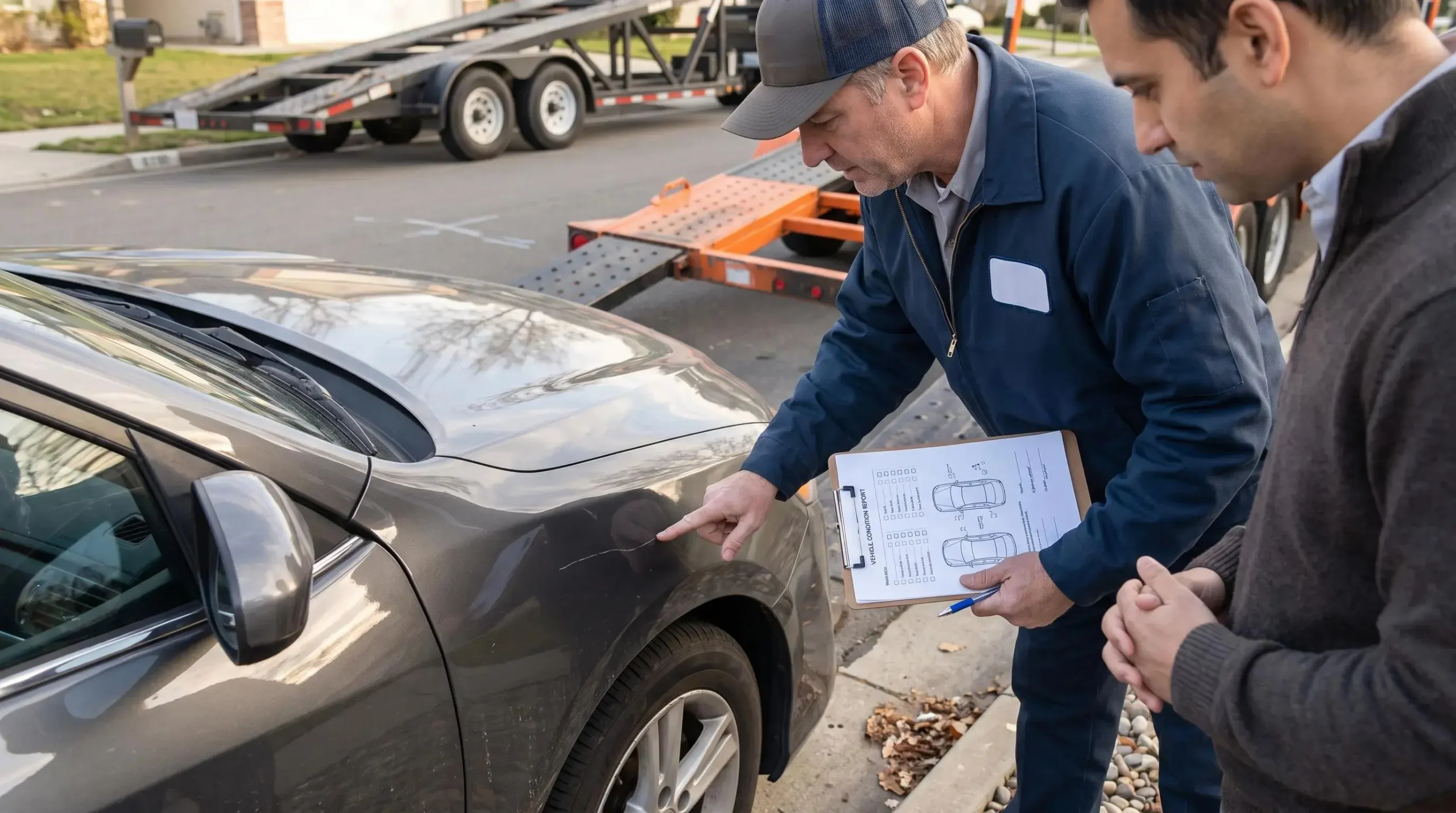
At pickup, the vehicle is inspected and its condition is noted. Payment timing should already be clear before the vehicle moves.
Transit stage
Cross-country moves usually take several days. Car carriers are moving multiple vehicles on route schedules. They’re not private point-to-point couriers, and expecting that leads to frustration.
Delivery stage
At delivery, there’s a final inspection and handoff. That’s the point where clear communication pays off. Nobody likes confusion at the curb after a long trip.
Frequently Asked Questions About How Much It Costs to Ship My Car
Here are the car shipping questions we hear most often.
How much does it cost to ship my car across the country?
For a standard vehicle on an open carrier, many coast-to-coast shipments fall around $1,300 to $1,900. Enclosed pricing is often higher.
How much does it cost to ship a vehicle about 500 miles?
Many regional shipments land in the several-hundred-dollar range, but route, timing, and vehicle type matter a lot. A representative 435-mile example came in around $873 open and $1,253 enclosed.
How much more does enclosed transport cost?
Often around 30 to 60 percent more than open transport, and sometimes higher depending on the route and vehicle.
Do SUVs and trucks cost more than sedans?
Usually, yes. Extra size and weight affect trailer space and load planning.
Does it cost more to ship a non-running car?
Usually, yes. Expect roughly $100 to $200 more in many cases because special loading may be needed.
Are rural deliveries more expensive?
Often, yes. Carriers may have to leave efficient main routes, which adds time and complexity.
Why is the cheapest quote not always the best quote?
Because the lowest number may not reflect real carrier pricing, realistic timing, or the actual shipment details. A quote has to work in the real market, not just on paper.
Conclusion
How much does it cost to ship a car is a fair question, and it has a knowable answer. Not one fixed answer, but a range you can judge with confidence.
The biggest price drivers are consistent: distance, route, vehicle size, transport type, season, vehicle condition, and pickup flexibility. Once you understand those, the quote stops feeling like a gamble.
A fair quote should be clear, explainable, and grounded in real shipment details. That’s the standard. If you’re ready to compare options, request a transparent quote, measure it against the factors in this guide, and work with a company that values insured transport, clarity, and no upfront payment until pickup.