
RV transport cost gets confusing fast when one quote is hundreds lower than another—and the missing details usually show up later. You need more than a mileage number before handing over the keys.
What matters is the RV’s size, condition, route, and whether a driver can actually reach your pickup spot. We’ll help you spot the assumptions behind the price before they become a problem.
Start by checking:
- Whether rooftop AC units push the height over 13 feet 6 inches
- If drive-away fuel is included or billed separately
- Whether a tight neighborhood requires a nearby meeting point
Know the real number. Move with confidence.
What RV Transport Cost Actually Covers
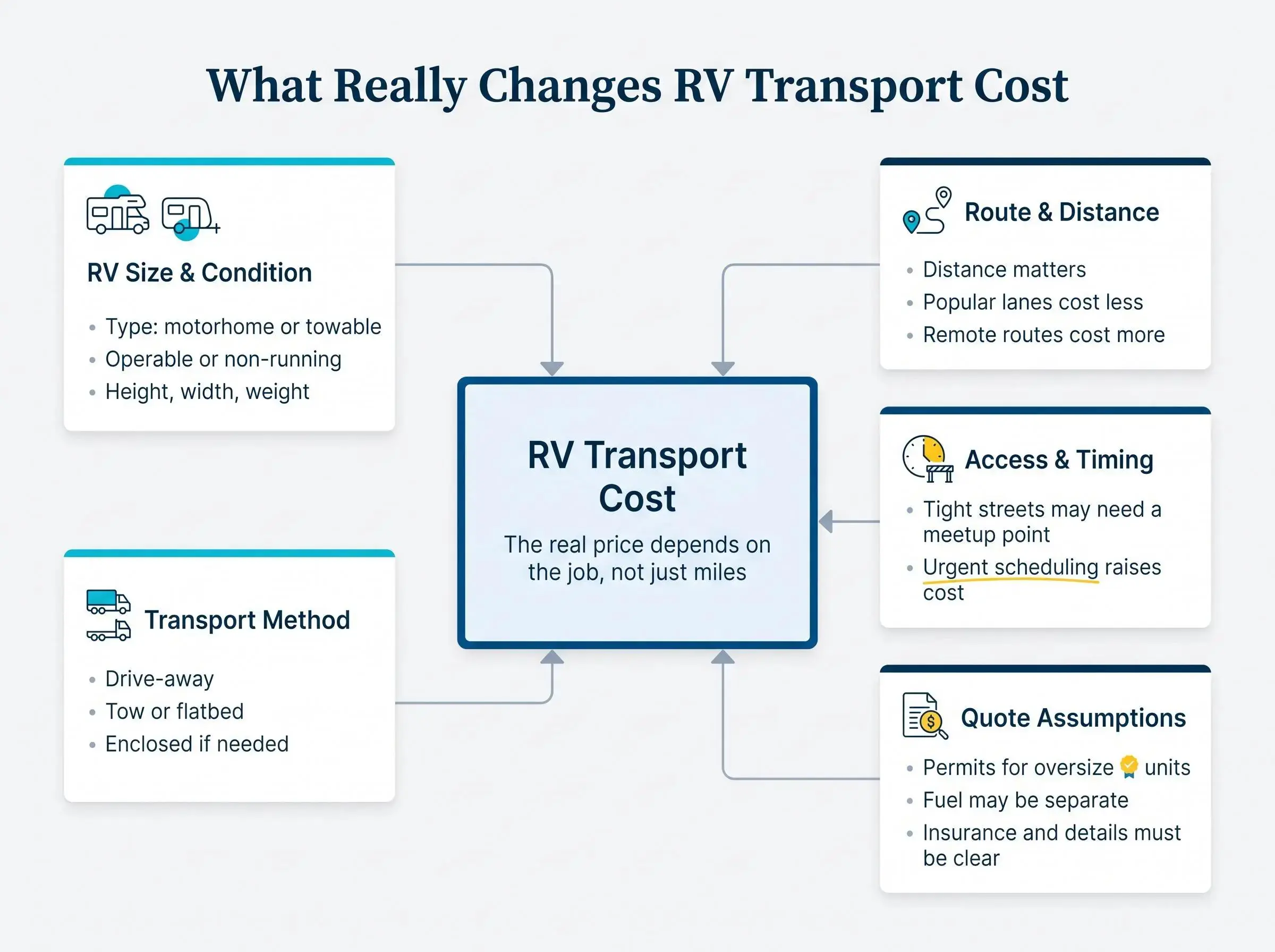
Most people start with miles and stop there. That’s where the confusion begins. rv transport cost is rarely just a distance number. It’s the total of what it takes to move your RV safely on a real route, with real equipment, on a real schedule.
A proper rv delivery estimate usually accounts for several moving parts:
- carrier or driver pay
- route difficulty
- pickup and delivery access
- whether the unit is operable
- equipment needed to move it
- permits, if the RV crosses oversize limits
- insurance handling
- timing pressure, if you need a narrow window
A simple move is one thing. A drivable Class C going between two easy metro areas is usually pretty straightforward. A tall Class A with rooftop equipment, tight pickup access, and a hard delivery deadline is a different job entirely. Same product category, totally different work behind the scenes.
That difference matters when you compare quotes. A cheap number can look good until you find out permits weren’t included, the carrier can’t get down your street, or the RV was priced as if it were smaller than it really is.
The quote isn’t the job. The assumptions behind the quote are the job.
This is also where trust starts to matter. You want insured door to door service, clear pricing, and payment terms that don’t push you into paying before anything is actually scheduled. In our business, pressure usually hides weak coordination.
How Much Does RV Transport Cost in the Real World
Let’s answer the question directly. How much does rv transport cost? It depends on RV type, distance, transport method, and how easy the route is to service. There’s no honest flat answer.
Shorter moves can land anywhere from a few hundred dollars to the low thousands. Longer interstate or cross country moves often rise into several thousand dollars. That’s normal. It’s not the industry being mysterious. It’s just that an RV is large, route sensitive, and sometimes awkward to handle.
Published route examples give a decent sense of the spread:
- Phoenix to Las Vegas: around $260
- Seattle to Los Angeles: around $1,100
- Chicago to Atlanta: around $1,200
- Dallas to Orlando: around $1,400
- Denver to San Francisco: around $2,500
Those numbers are useful for context, but they are not promises. The same Dallas to Orlando route can price very differently if one unit is a compact towable and the other is a larger motorhome with height issues or a strict pickup date.
Generic calculators miss this all the time. They don’t know if your unit is oversized, non-running, easy to access, or being moved during a tight market week. That’s why a single flat rate often tells you less than you think.
When you read an rv delivery estimate, don’t just ask, “Is this expensive?” Ask, “What did they assume?” That’s the question that separates a usable quote from a bait number.
Motorhome Shipping Rates vs Travel Trailer Transport Pricing
People often compare these like they’re the same service. They aren’t. Motorhome shipping rates and travel trailer transport pricing follow different logic because the equipment, labor, and risk are different.
Motorhomes
Class A, B, and C motorhomes may qualify for drive away delivery if they are road legal and mechanically sound. In plain terms, a professional driver delivers the RV by driving it. That can make the pricing much different from hauled trailer transport.
A smaller, operable Class C can sometimes move more simply than a heavy fifth wheel going the same distance. That surprises people, but it shouldn’t. One can be driven. The other needs towing or hauling.
Towables
Travel trailers, fifth wheels, pop ups, toy haulers, and cargo trailers usually need a different setup. Carrier availability narrows as size and weight go up. Large fifth wheels can be especially tricky because not every transporter is set up for them.
Here’s the practical version:
- a drivable Class B or Class C may have more flexible delivery options
- a fifth wheel often needs more specific hauling arrangements
- a damaged or non-running unit almost always costs more
- larger, heavier RVs shrink the pool of available carriers, and prices usually rise when that happens
Two RVs can travel the same 1,200 miles and produce very different quotes. A roadworthy Class C might move one way. A large fifth wheel on that exact same lane may need different equipment, tighter routing, and more coordination. Same distance. Different job.
The Transport Method Changes the Price Fast
If you really want to understand rv transport cost, start with the method. This is where price can jump quickly.
Drive away transport
With drive away transport, a professional driver delivers the motorhome by driving it to your destination. For operable motorhomes, this is often the most economical option.
It comes with tradeoffs:
- miles go on the odometer
- the RV has to be roadworthy
- documentation needs to be in order
- some costs, like fuel, may be handled separately depending on the arrangement
For a usable motorhome, drive away can make sense. For a high value coach you don’t want on the road, maybe not.
Flatbed or tow transport
This is common for towables, non-running RVs, and situations where owners don’t want road miles added. It usually costs more than drive away because the equipment requirements are higher and handling gets more involved.
A lot of quote shock starts here. People compare a drive away number to a flatbed or tow setup and think one company is overcharging. They aren’t even quoting the same service.
Enclosed transport
When enclosed transport is available and appropriate for the unit, extra protection usually raises the quote because equipment choices are more limited. This is a specialty option, not a default fit for every RV.
The cheap method isn’t always the right one. If the unit is oversized, not drivable, or something you want protected off the road, the better choice may cost more. That’s not waste. That’s fit.
Distance, Route Popularity, and Delivery Windows Matter More Than Most People Realize
Distance matters, but lane efficiency matters almost as much. The cost to haul an RV is shaped by both.
Longer hauls often have a lower per mile rate than short trips. But the total bill still ends up much higher because you’re covering more ground. People get tripped up by that every day.
Route popularity changes things too. Common national lanes tend to have more carrier activity. Rural pickup points, remote delivery areas, or awkward in-between locations can cost more because they are harder to service cleanly.
Transit windows generally fall into a few broad ranges:
- 0 to 799 miles: often 1 to 4 days
- 800 to 1499 miles: often 4 to 7 days
- 1500 to 2399 miles: often 6 to 10 days
- 2400 miles and up: often 10 to 15 days
Those are transit averages, not scheduling guarantees. Pickup timing is its own issue, and urgency changes price fast. Last minute requests usually cost more. Busy shipping seasons can tighten capacity. Expedited delivery almost always adds cost.
One of the easiest ways to improve pricing is simple: give the route some breathing room. Flexibility helps more than most people expect.
Size, Weight, Height, and Permits Can Add Hundreds or Thousands
Length gets all the attention, but it isn’t the whole story. Height, width, weight, slide outs, rooftop accessories, and the total road footprint all affect pricing.
Two thresholds matter a lot:
- over 13 feet 6 inches in height
- over 102 inches in width
Once an RV crosses those limits, permit needs and route restrictions often enter the picture. That can mean:
- state permits
- route specific planning
- pilot cars in some situations
For large Class A motorhomes and some fifth wheels, oversize add-ons can push the price up by roughly $500 to $2,500. Sometimes more planning is the issue. Sometimes it’s direct permit cost. Sometimes both.
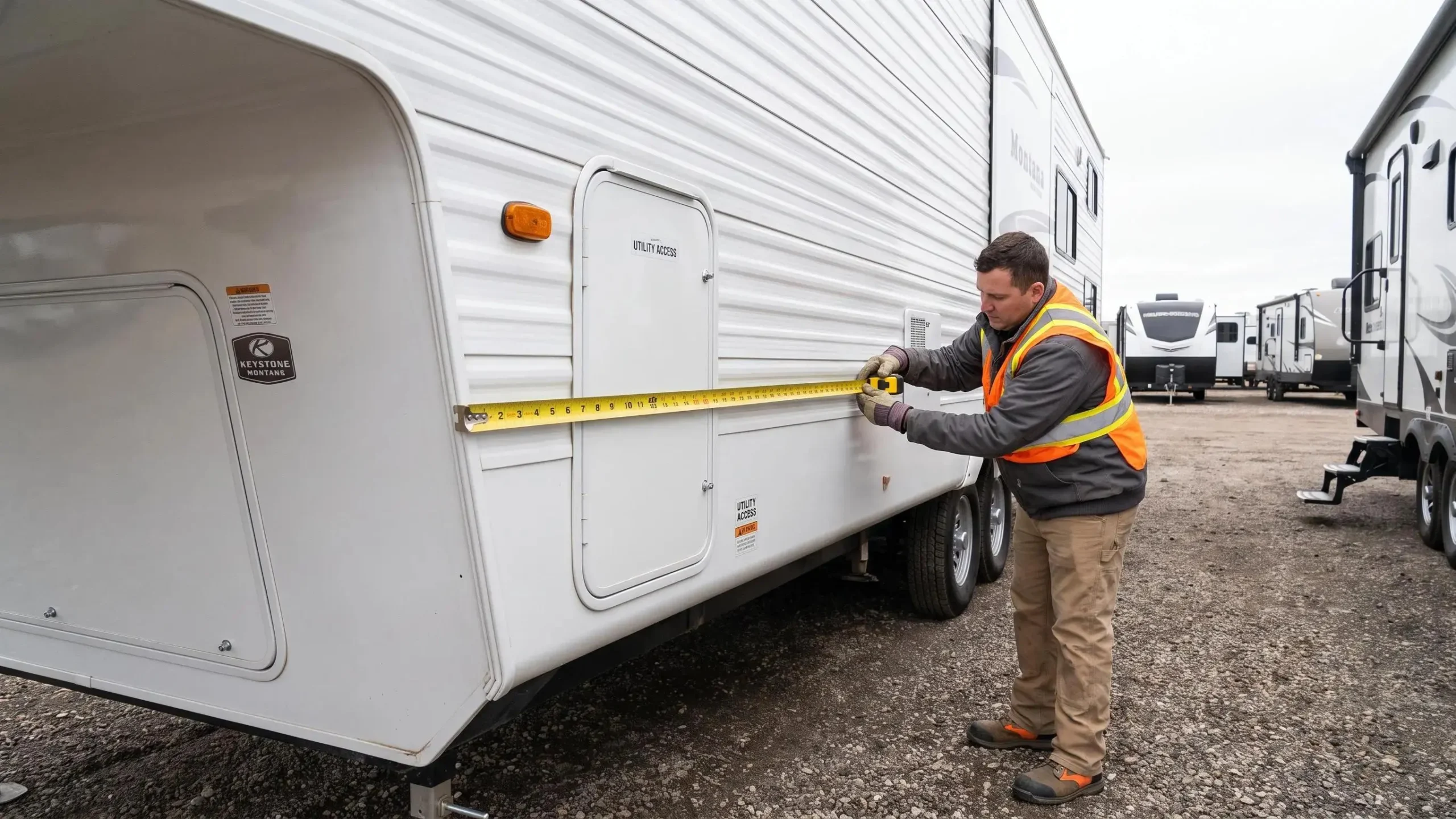
The mistake we see over and over is bad measuring. Not dishonest, just incomplete. People forget rooftop AC units, ladders, racks, antennas, spare tires, or anything else that sticks out beyond the basic body dimensions. Then the quote changes later, and nobody is happy.
Measure carefully before you request pricing. Include the accessories. Include the pieces that seem minor. Small oversights can turn into expensive corrections.
Access at Pickup and Delivery Can Quietly Change the Quote
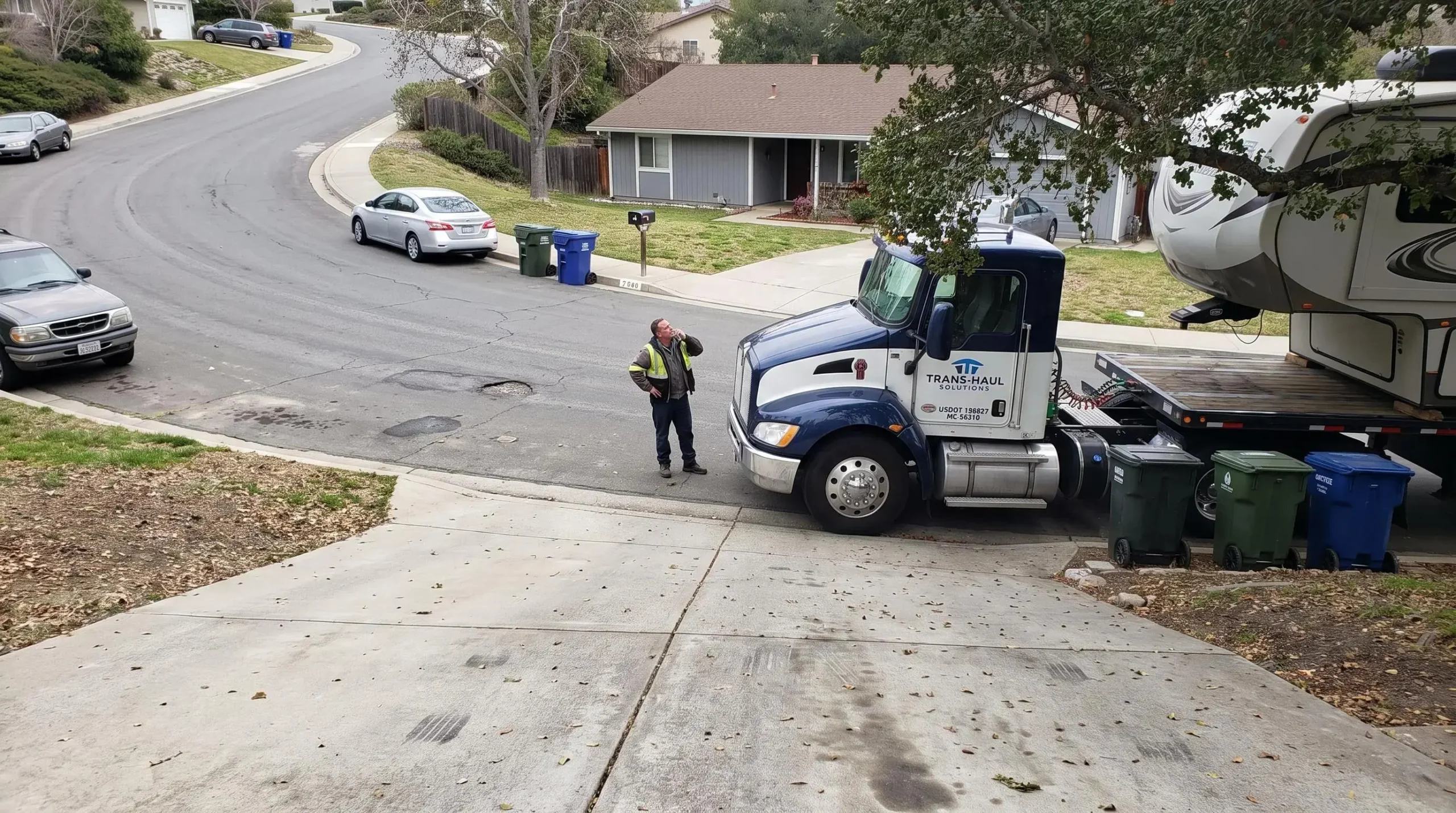
Door to door service is a real thing, but it doesn’t mean every truck can safely reach every address. Access conditions can change travel trailer transport pricing or motorhome shipping rates without much warning if they aren’t discussed upfront.
The usual trouble spots are familiar:
- tight neighborhood turns
- low tree branches
- steep driveways
- city restrictions
- limited space to stage or load
- parked cars and general obstruction
Sometimes the fix is simple. Meeting the carrier at a nearby open lot, wide commercial area, or easier roadside point can solve the problem and keep the job moving. People resist that at first because they want true doorstep convenience. Fair enough. But convenience has geometry.
If the truck can’t safely get in and out, the address isn’t really door to door.
Access is one of those details that looks small on paper and becomes very big on pickup day. Exact addresses, honest site conditions, and a few photos when needed can prevent last minute repricing and scheduling mess.
Condition, Documentation, and Preparation Affect Cost Too
Condition isn’t just a safety issue. It’s a pricing issue.
Drive away transport usually requires the motorhome to be licensed, insured, and mechanically sound. If the unit has known mechanical problems, warning lights, tire issues, or reliability concerns, the transport method may need to change. And once the method changes, the quote usually does too.
Published cost guides also account for preparation related items like paperwork, hitching, insurance documents, and extra handling. None of this is glamorous, but it matters.
Use a checklist mindset before you ask for a quote:
Before requesting transport
- Operability
confirm whether the RV is fully operable
- Dimensions
verify exact dimensions
- Loose contents
secure loose contents as instructed
- Paperwork
gather registration, insurance, and any transport paperwork
- Fuel charges
clarify if fuel is included or billed separately in drive away arrangements
That last one catches people off guard. In some drive away setups, fuel is not bundled into the transport charge. You want that answer early, not after the route is underway.
The Real Cost to Haul an RV vs Driving It Yourself
A lot of people compare professional transport to fuel alone. That’s too narrow. Fuel is just the obvious cost.
The real do it yourself equation usually includes:
- fuel
- lodging
- meals
- tolls
- wear on the RV or tow vehicle
- time away from work
- the stress of a long multi day trip
On a long move of about 2,500 miles, published examples put the math around here:
- fuel: about $972 based on 9 MPG and $3.50 per gallon
- lodging: about $600 for 4 nights
- meals: about $240
- tow vehicle wear: about $375
- lost income: about $1,000
That lands around $3,187.
Professional shipping on a similar long move may fall roughly in the $2,500 to $3,500 range. Not always lower, not always higher, but often closer than people expect.
That’s the point. Sometimes professional transport is not dramatically more expensive than doing it yourself once you count the hidden costs honestly. And sometimes it saves the RV from an extra 2,500 miles of wear. That matters too.
How to Read an RV Delivery Estimate Without Getting Burned
A good estimate should feel explainable. If it feels slippery, slow down.
When you review an rv delivery estimate, verify these details:
- transport method
- exact RV type and dimensions used for pricing
- permits or pilot cars, if the unit may need them
- insurance handling
- fuel treatment in drive away scenarios
- pickup and delivery access assumptions
- expedited or timing related surcharges
Also ask one direct question: is this a working estimate or a firm price based on confirmed details? There’s nothing wrong with an estimate if it’s clearly labeled as one. There is a problem when a soft number gets presented like a final commitment.
Payment terms matter more than people think. A no upfront payment until pickup model reduces pressure and keeps you from putting money out before a carrier is actually assigned.
This is also where company approach shows up. With broker managed nationwide transport, we think readers should put transparent pricing, carrier insurance coverage, and clear door to door coordination ahead of bargain numbers that leave space for hidden fees. At NexRoute Transportation, that’s the framework we use: nationwide coordination, insured transport, transparent pricing, and no upfront payment until pickup.
Common Mistakes That Make Quotes Higher or Less Trustworthy
Most quote problems are traceable. They don’t come out of nowhere.
Here are the common pricing mistakes:
- giving rough measurements instead of exact ones
- forgetting rooftop AC units, racks, spare tires, or other accessories
- assuming every quote includes permits or difficult access
- waiting until the last minute
- comparing a drive away quote to a flatbed quote as if they are equal
Then there are the trust mistakes, and these cost people more than they realize:
- chasing the lowest number without checking what’s included
- ignoring how insurance and payment timing are explained
- accepting vague delivery windows and shifting terms
- treating silence as a good sign when it’s usually just missing detail
Price differences usually have a reason. That’s the part we want readers to leave with. Cost is not random. In most cases, the spread between quotes comes back to method, dimensions, access, timing, and how honest the assumptions were at the start.
When It Makes Sense to Request a Fresh Quote
Sometimes the smartest move is not to keep squeezing one old estimate. It’s to get a new one based on better information.
A fresh quote is worth getting:
- after you’ve confirmed exact dimensions and operability
- if the route changes
- if timing becomes urgent
- if season, weather, or access conditions shift
- if the RV was just purchased and its actual condition is now clearer
This comes up all the time with:
- cross country relocations
- seasonal moves
- online purchases
- family moves
- dealership or business transfers
A quote should be a decision tool, not a trap. You should be using it to understand the real cost to haul an RV based on verified facts, not getting rushed into a commitment before the details are settled.
Conclusion
rv transport cost comes down to a handful of real variables: RV type, transport method, distance, route popularity, access, dimensions, permits, timing, and condition. Once you see those pieces clearly, the pricing stops feeling random.
A trustworthy quote should feel plainspoken and explainable. You should be able to look at motorhome shipping rates or travel trailer transport pricing and understand why the number is what it is.
If you’re getting ready to move an RV, gather the exact measurements, route details, access info, and your timeline first. Then request a transparent quote from a transport provider that explains what is included and doesn’t ask for upfront payment before pickup. That’s how you stay in control of the decision.